
Summary
This episode is part of the Beyond a Brain Injury: Talking Mental Health and ABI podcast mini-series, an initiative of the Queensland Paediatric Rehabilitation Service SHARE project, produced with funding from the National Injury Insurance Scheme Queensland (NIISQ).
Navigating adjustment, wellbeing and family life after coming home
Leaving hospital can be an important milestone after an acquired brain injury (ABI), but coming home can bring a new set of challenges for children, young people and their families.
Without the routines and support of hospital around you, families begin adjusting to changes in everyday life, relationships, school and expectations for recovery. Emotions and mental health can fluctuate over time as everyone begins to process what has happened.
In this episode, clinicians and the Clayton family explore what life after hospital can look like and share practical advice for supporting the mental health and wellbeing of the whole family.
The episode explores:
- adjusting to life at home after an ABI
- understanding that recovery is not always linear
- grief and loss as a child grows and circumstances change
- supporting a child or young person’s mental health
- changes to family roles and relationships
- the experiences and strengths of siblings
- navigating school, community and other supports.
Meet our guests
Dr Valda Biezaitis
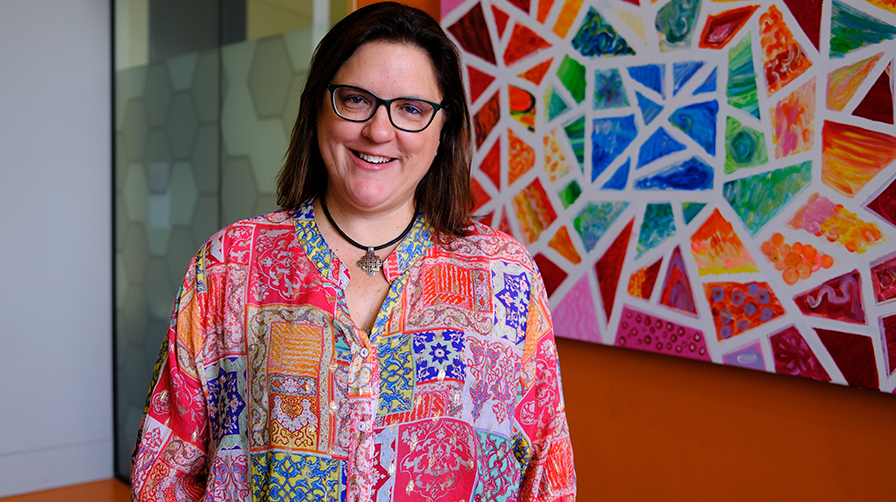
Clinical Neuropsychologist, Queensland Children’s Hospital
Dr Valda Biezaitis has more than 20 years’ experience supporting children and young people with acquired brain injury, neurological conditions, developmental and learning difficulties, and mental health conditions.
Valda works alongside young people and their families to understand how an injury can affect thinking, learning, behaviour and wellbeing, and to identify strategies that support them as their needs and goals change over time.
Alana English
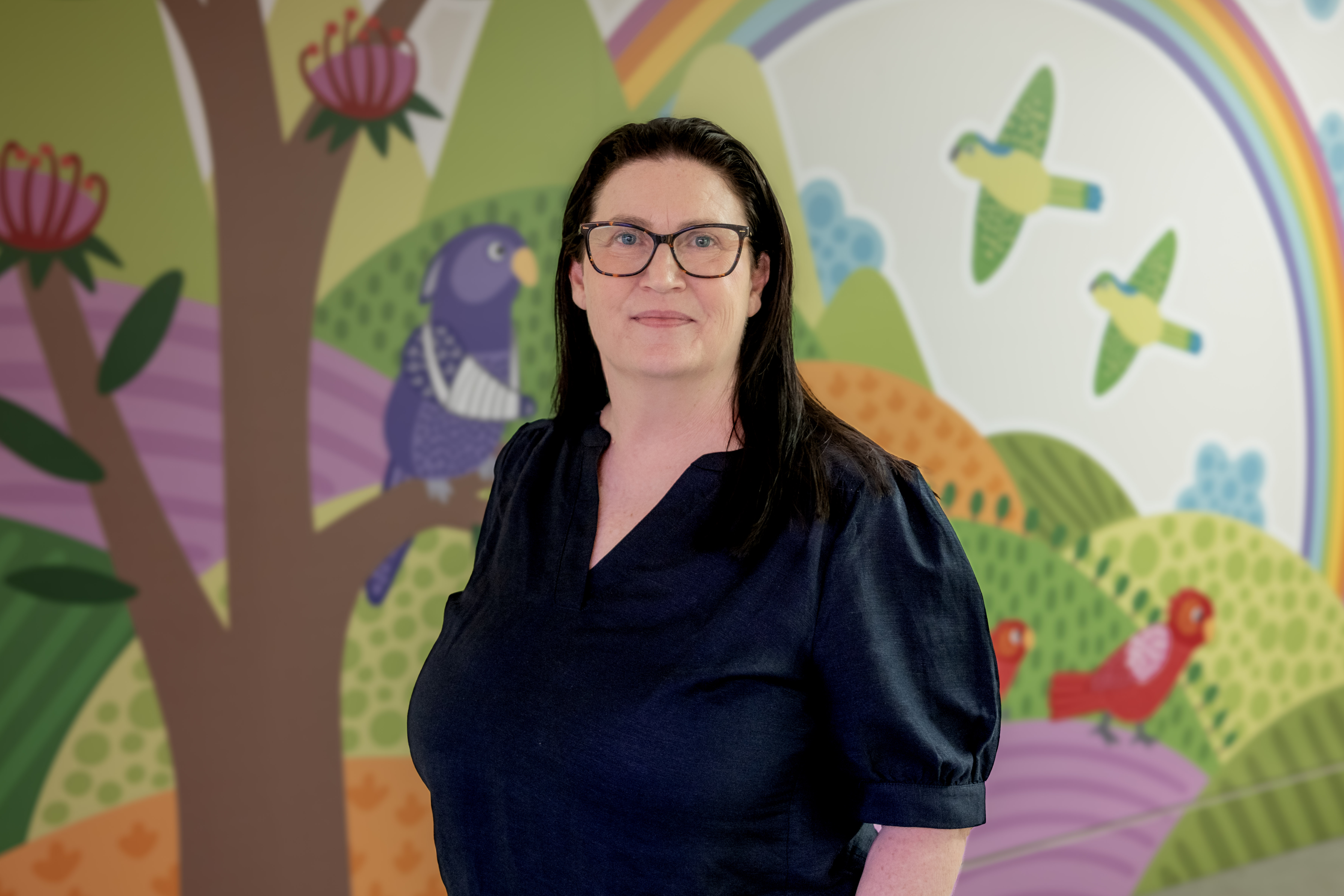
Advanced Social Worker, Queensland Children’s Hospital
Alana English has more than 30 years’ experience as a clinical social worker, including more than 15 years with the Queensland Children’s Hospital
Her experience spans a diverse range of clinical, research and program management areas, including paediatric rehabilitation, child and youth mental health, family therapy, paediatric sepsis care and hospital social work. Alana is passionate about supporting families experiencing grief and loss, trauma and life-changing events, with a strong strengths-based focus on psychosocial wellbeing, trauma informed care and the integration of lived experience into meaningful improvements in healthcare.
The Clayton family
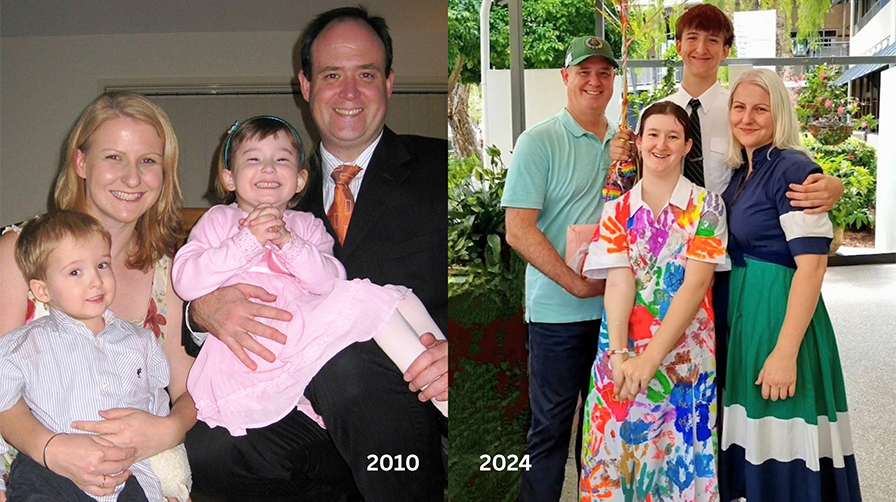
For Amanda and Jamie Clayton and their family, Sophie’s stroke at four years old marked the beginning of a journey that continued well beyond leaving hospital.
Sophie returned to hospital regularly for therapy and care over the following years and continues to manage some of the long-term impacts of her ABI. Her family has supported her to set her own goals, build independence and embrace opportunities along the way.
Sophie’s younger brother Elliot has also played an important role in her recovery, highlighting the impact an ABI can have on the whole family and the important role siblings can play.
The Clayton family now use their experience to raise awareness of childhood stroke and support other families navigating similar journeys. Amanda is also the Co-Chair of Children’s Health Queensland’s Family Advisory Committee.
Read more about Sophie’s story.
More from the series
There’s more to the conversation. Explore practical advice and information about mental health impacts and supporting children, young people and families after an acquired brain injury.
Episode 1: When everything changes
Episode resources
If you or someone you know is struggling with their mental wellbeing, support is available.
In an emergency, always call Triple Zero (000).
The following services can provide help and counselling to you in non-emergency situations.
13HEALTH, call 13 43 25 84 and talk to a registered nurse 24 hours a day, 7 days a week.
Disclaimer
The stories and conversations shared by the guest in this podcast reflect their personal views, experiences, and opinions. They are shared for informational and educational purposes only and are not intended as a substitute for professional medical advice, diagnosis, or treatment.
If you have questions about your child’s health or treatment, please speak with your child’s healthcare team.
Transcript
Jamie: I think what, what was the hardest about that new normal is the fact that you had a very different child.
Amanda: I didn't expect my relationship with friends and family and my husband to change as much as it did.
Host: Hello, and welcome to episode two of Beyond a Brain Injury, a Children's Health Queensland podcast for you, the parents and families of children who've acquired a brain injury.
Amanda: Well, if you think that just because they've got a brain injury, they're not going to have a wonderful life, they're just going to have a different life.
Host: I'm Britt, and in our first episode, we met Amanda, Jamie, and their 20-year-old daughter, Sophie, who's been living with an ABI since she was four. They detailed some of the emotional and psychological impacts they experienced in the early days. In this episode, it's time to head home.
Amanda: In a hospital, you are taken care of, and you might not like the food, you might not like the showers or the soap that's provided, but you don't have to worry about anything except for the child in that room. You don't have to worry about the ironing, the washing, the laundry. And then you go home, and then there's chaos everywhere.
Host: Amanda constantly goes back to the same analogy. Leaving hospital with her four-year-old daughter after she'd acquired a brain injury, it was like coming home with a brand-new baby. Sophie's dad, Jamie, remembers the transition being incredibly confronting.
Jamie: You had a very different child, so it's like starting again. Like, you've, you've had a child, they've got to age four, they've got certain personality and traits and ways of doing things, and then it's like you've got just a completely different child from, from that point onwards. And that was really confronting.
Host: It's a big stage of adjustment for everyone.
Amanda: Just think of when you had a brand-new baby. You put things in place to keep you safe and your family safe, and for your family to work it out together. Not everyone was allowed to come and visit when you had a brand-new baby. You said, "These people only." Put it in place. Put some rules around it and say, "This is the time. We're starting a new type of family. We need to get this new family sorted."
Host: We met social worker Alana English in our last episode, who worked closely with the Claytons during this transition home from hospital after Sophie's stroke. She wants every parent in a similar situation to know they can have boundaries.
Alana: Feeling okay to be able to say to people, "This is what we need right now," and actually prioritising that as opposed to what other people need, whether they need to come and visit or they need to be there, that you're actually prioritising we just need this time and space to try and work out who we are and how we function now as a family and having the opportunity to do so just as the core family unit.
Having said that, I would say that people want to help. They want to feel like they're doing something, so give them something to do. There'll be a lot going on. You won't be able to be managing all the things you would normally do, so delegate tasks to people.
Host: The Claytons were overwhelmed by support, or the village, as it's so often referred to, at the start. But I will warn every family out there, there are very well-meaning families that are going to bake things and drop them off. It will drop off. Same with a newborn baby. Everyone wants to play with the baby when it's little, and no one wants to take the toddler. What did also happen for our family is we lost at least half our friends.
Jamie: We found it really hard to continue relationships with just normal parents, so parents that didn't go through this sort of trauma. And so, a lot of the families that we, we would spend a lot of time with, um, majority of those have sort of moved on. Probably more from our side in that we've had to devote a lot of our time and energy into things for our family.
Amanda: That being said, we have some of the deepest, strongest friendships now with people that have gone through any hospital admission. It does not have to be a traumatic brain injury. But you will start to find those supports around you. You will find those people, and they get it.
Host: Those supports, whether they be friends, family, or mental health professionals, will be more important at different times for different people. That initial discharge from hospital is one of those times where talking to someone can really help.
Alana: I think what also becomes apparent in that transition to home, where you have the most acute acknowledgement of how things are different from when you were last in that home. And you do that as a parent, you know, as a family, like, "This is our routines, and this is how things would work, and this is how we'd spend our weekends, and this is how we would manage conflict, and this is how we have conversations." And potentially, all of that's changed and that becomes acutely apparent when you return home with a child that's different to the way they were before.
Host: Neuropsychologist Valda Biezaitis says those unexpected moments are just that, and different for every family.
Valda: For the adolescents, when it comes time to learn to drive and all their friends are learning to drive, this can be way down the track post brain injury, but that can r- raise a whole lot of grief, not only for the young person who it's a right to be able to drive but the family then as well, the independence that this young person is not going to have.
Host: At this point, it might be helpful for us to consider a concept called living loss or non-finite grief. For most of us, our experience of grief surrounds the death of a pet or someone we know. And as painful as that is, there's a clear point in time where the grief occurs.
Alana: Whereas for a parent or even a sibling or even sometimes the individual themselves with the ABI, it's this ongoing grief process that doesn't really have a specific end point. Because as we talked about, the constant points in time that you re-grieve, points in time where developmental goals aren't achieved, points in time where transitions aren't achieved, points in time where you have a difference between your perception of what your child's life was going to be like and the reality of what your child's life is going to be like.
And within that, there's also the perception that you had of what your parenting was going to be of that child, and the reality of what your parenting is of that child, because it changes. It's not the same. You can't be the same parent to that child afterwards. So, there's this constant ongoing process where you experience that grief over and over.
Host: And it's not just loss associated with changes in your child or your role as a parent, but losing the future you imagined for you and your family.
Jamie: I missed lots of it.
Host: Jamie went from running his own consulting business. He had to shut that down and pivot his entire career after Sophie's ABI.
Jamie: I suddenly had to, to be in, in roles that kept me very, very busy and away from the family. That could allow Amanda to spend 100% of her time, supporting my daughter, which was what she needed and what we needed as, as a family.
Host: And the reality is Amanda's only just returned to work after more than 15 years as Sophie's primary carer.
Amanda: You do grieve. You do miss the life you thought you were about to have, but grief isn't just in the first month.
Host: That feeling, mourning a future you saw for yourself, won't likely go away. Alana says that recurring underlying grief, it can be referred to as chronic sorrow.
Alana: So, you're constantly having to shift and reexperience the reality over time to then align with what your new reality is. And so, there's a chronic sense of loss and sorrow that comes with that. So, you're in a world where you can potentially adapt to that and have strategies in place to manage, and you have hope, and you have, um, achievements, and you have things that you can see are successes and things that you celebrate, but it's also constantly aligned with this perception of what things were like.
Valda: Not only comparing what your dreams and hopes were for your child and the reality, but also what you see other children, not only other typically developing children, but other children who might have acquired a brain injury that might be different to your child's brain injury and might kick milestones and kick goals differently to how yours might. And I think parents and families can, and kids can fall into the trap of comparing themselves with not only that dream, but also the reality for others. And I think that's really something we've got to be quite cautious about in brain injury because every brain injury is different.
Jamie: Sometimes silly little things will trigger it. Sometimes just looking at some of the old photos. They often pop up in your phone, and it will just come out of the blue, and it'll knock you about, and you get very emotional, and you get very upset, and you remember the things that, that were really hard at the time. And I think that just constantly happens. And, and you can't sort of stop it, and you need to just let it play through. I think there's... And it happens differently between my wife and I.
Host: And when you're back home, the comparisons and reminders of what life was like before are everywhere. Valda warns it may even feel like your child's recovery is slowing down when you're no longer in hospital.
Valda: I think in these initial phases, so parents might notice improvements every day, and they're changing every day. Whereas that seems, it appears to slow down. Recovery hasn't stopped when they leave, but actually it's more that it's less visible.
Host: Valda encourages parents to recalibrate their expectations and realise recovery from a brain injury could be lifelong.
Valda: A brain injury occurs at a single point in time, but the brain injury itself, the incident that might have created that brain injury, is not the whole picture. Rehabilitation is a journey, and it's a lifelong journey for a lot of the young people and the families that we, we work with. And there are, in the context of a brain injury in childhood, it happens to a developing brain. So, the impact of that brain injury changes over time.
Host: Different developmental stages may also present new challenges, and there's one that really sticks out for Sophie.
Sophie: Um, puberty's a bitch. I didn't, I didn't realise this until now, but puberty and the hormones and everything mainly took over and was mainly too much. I was having meltdowns every night throughout my last couple of years of high school.
Valda: Adolescence is difficult, isn't it? We're trying to grow up and work out who we are in the world and what our identity is, and I think that's a tricky time for any young person, but particularly in the context of brain injury, where some of the skills that are expected and some of the achievements you might be looking to- looking forward to, getting a girlfriend or a boyfriend or graduating from high school, that might not be the same.
I guess the other thing is we know that hormones are rife, but that might happen in the context of a young person that might have difficulties due to their brain injury- managing and regulating their emotions. So, we often see young people with difficulties with anger, or they might be more anxious than they were, or they might have been, or than their peers are.
Learning how to deal with these big emotions that they're, they're experiencing due to hormones, but also exacerbated because of the brain injury that they've had.
Amanda: A lot of people just go, "Oh, no, that's just being a teenager." It's not. The hormones impact the brain, the body. You kind of go, "Well, is this age appropriate? Is this brain injury? Or is this hormones? Or is this friendships?" And there's too many things.
So, at the beginning you've got, is this just brain injury? And then you get them into life, and there are times when you really, well, I definitely struggled when Sophie was going through that. And then you will need probably to access psychology and all of those other things. Don't be scared to do that because you can say, "This isn't the girl that I had two years ago."
Valda: I think considering professional support at the times of transition when we know that there's high risk, we call them high-risk times, going back to school, going from primary school to high school, leaving school, those sorts of things. I think being prepared for having those conversations is important.
Also, I think it's important that we monitor a young person as well as a family's wellbeing. So, if we see significant anxiety, low mood, talk of self-harm, withdrawal, those sorts of things, I think we need to respond to that promptly.
Host: Those mental health supports that Amanda and Valda talk about are available to parents, whether you're days, years, even decades down the track after your child's ABI diagnosis. There's info on how to access them in the show notes and on the Children's Health Queensland website.
Alana: Information is power. So, understanding that this is potentially experience and this is what you're going to be dealing with and these will be the highs and lows, I think is helpful for preparing yourself for that. I think it's a much more difficult space to be in as a parent to perceive that, oh, well, it's just going to be really tricky in the inpatient stay, and then when we get home, everything's going to feel okay. You know? Or there's not really going to be challenges, or I'm not really going to feel like there, there'll be grieving after that. I think knowing that this is potentially what you're going have to deal with helps parents to then kind of if, you know, three, four years down the track there's a significant experience or a significant event that causes significant grief for you, you don't then sit there and go, "What is going on? Why am I feeling this now?" 'Cause of course you are, because you're still dealing with the ongoing losses associated with the change in your child.
Host: Maybe you found it difficult to book that first appointment. Jamie can relate.
Jamie: It took me quite a few times of someone saying, "Hey, I think you need to talk to someone," before I went, "Yeah, okay, I'll, I'll go and talk to someone." And it was awkward, and it was uncomfortable, and it was very emotional. But it was, in hindsight, probably the best thing that happened.
Host: For Jamie, it was learning to accept that he can't fix all the challenges that present Sophie as she navigates living with a brain injury.
Jamie: You're just not prepared and blokes don't like not being prepared when there's a problem that comes along. And they think they can solve it themselves, and well, to be honest, we're not really built that way. We don't think that way. You know, if we're upset or, um not able to solve something, we just keep it inside, and then that builds up, and that causes other problems.
Host: It won't always be a professional though, and at times, the most helpful person to talk to might be a friend or a family member.
Amanda: I wish people could just go, "I don't need to understand Amanda's life. I just need to know that if she asks for help, that's when I can help. And if she doesn't ask for help, just keep an eye on her and make sure she's okay."
Host: As we touched on earlier, your support networks will most likely change, and it can help to seek out other parents whose children have significant disabilities or high needs. Alana says it's about finding your people that simply get it.
Alana: And you may be able to do this a little bit informally through turning up to different appointments, enrolling in different activities that are focused on supporting kids with, with disabilities, but it also might be a bit more specific in terms of some people like to join online groups and kind of connecting with people in that way. But I would definitely encourage you, when you feel ready for that kind of support, to be reaching out and trying to connect with people with similar ideas and needs and experiences.
Valda: I think we need to be encouraging the conversation of, "How are you going?" And that's not just for the family, but also for the young people themselves and siblings as well and putting in place supports around dealing with and processing what's happened, what this might mean for them.
A lot of our young people don't want that, and I guess what that looks like can be different as well. It doesn't have to be counselling support. It doesn't have to be formal therapy. It can be peer support. It can be parental support. It can be just being able to chat over with your physiotherapist about how you're feeling, for example.
Host: For Amanda, she recalls a special friendship with another mother whose daughter has since passed away. There was a stage when both moms were full-time carers for their children. They didn't have capacity to catch up, but a simple text message went a long way.
Amanda: I wanted to check on her every day, but I didn't want to ask how it was all going. So I started taking photos of my shoes and said, "What are you wearing today?" And so she would take photos of her shoes. And there was nothing else other than, "I'm thinking of you. Check out my shoes."
Sophie: Get somebody in your life you can talk to those, um, feelings about. Get somebody in your life you either feel comfortable around and you know as more than I just emotionally dump all of my feelings on, but are actually friends with in your life. And get that somebody who is pretty much good in your life to talk about that stuff with you.
Host: Thanks for joining us. Beyond a Brain Injury is a Children's Health Queensland podcast. It was produced with funding from the National Injury Insurance Scheme Queensland as part of the Queensland Paediatric Rehabilitation Services SHARE project. Special thanks to Amanda, Jamie, and Sophie for their insights, and our expert guests, Alana English and Valda Biezaitis.