
Summary
This episode is part of the Beyond a Brain Injury: Talking Mental Health and ABI podcast mini-series, an initiative of the Queensland Paediatric Rehabilitation Service SHARE project, produced with funding from the National Injury Insurance Scheme Queensland (NIISQ).
Supporting your child and family in the early days after an acquired brain injury
When a child or young person experiences an acquired brain injury (ABI), life can change very quickly. Alongside the physical impacts of the injury, children, young people and their families can experience a range of emotions including shock, grief, fear and uncertainty.
In this episode, we explore the mental health and wellbeing impacts of ABI in the early days following an injury or diagnosis.
Hear from clinicians and the Clayton family as they discuss what families may experience during this time, why there is no ‘right’ way to respond, and practical ways parents and carers can support their child, themselves and other members of the family. The episode explores:
- common emotional and mental health responses following an ABI
- grief, loss and adjusting to unexpected change
- supporting siblings and the wider family
- looking after yourself as a parent or carer
- finding hope while navigating uncertainty.
Meet our guests
Dr Valda Biezaitis
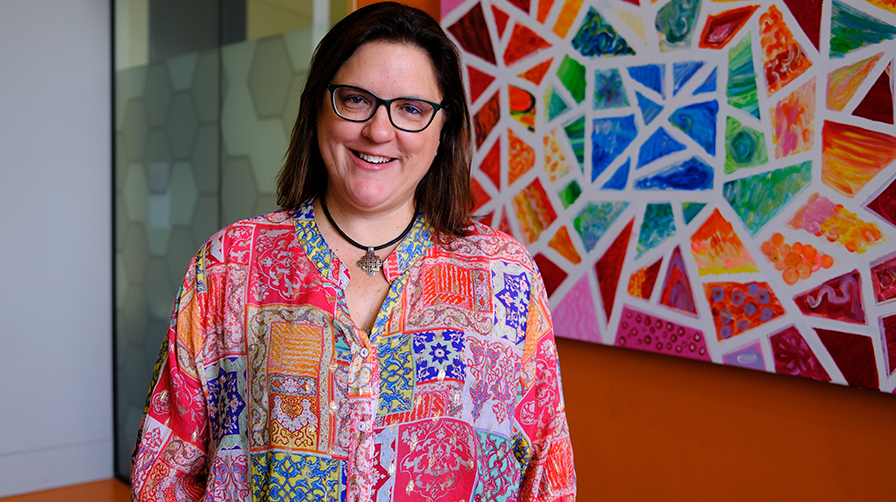
Clinical Neuropsychologist, Queensland Children’s Hospital
Dr Valda Biezaitis has more than 20 years’ experience supporting children and young people with acquired brain injury, neurological conditions, developmental and learning difficulties, and mental health conditions.
Valda works alongside young people and their families to understand how an injury can affect thinking, learning, behaviour and wellbeing, and to identify strategies that support them as their needs and goals change over time.
Alana English
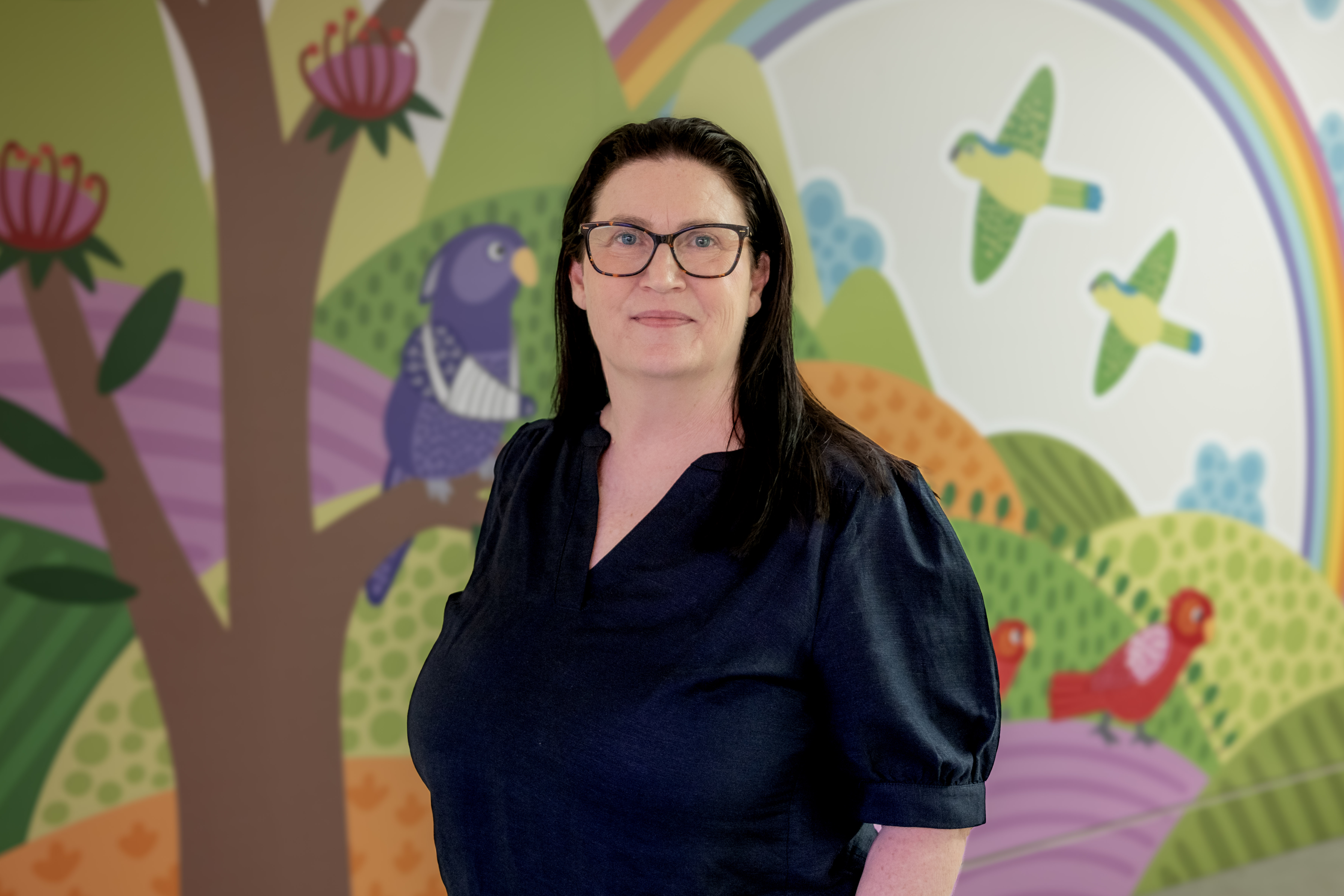
Advanced Social Worker, Queensland Children’s Hospital
Alana English has more than 30 years’ experience as a clinical social worker, including more than 15 years with the Queensland Children’s Hospital
Her experience spans a diverse range of clinical, research and program management areas, including paediatric rehabilitation, child and youth mental health, family therapy, paediatric sepsis care and hospital social work. Alana is passionate about supporting families experiencing grief and loss, trauma and life-changing events, with a strong strengths-based focus on psychosocial wellbeing, trauma informed care and the integration of lived experience into meaningful improvements in healthcare.
The Clayton family
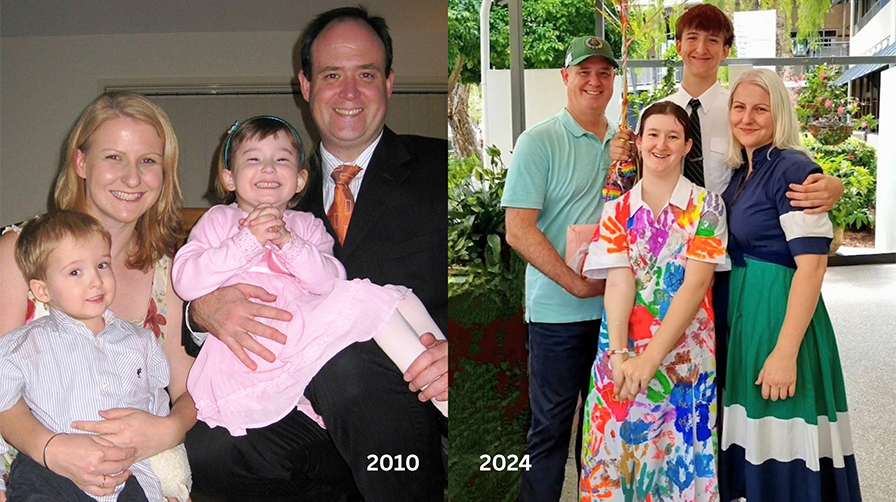
For Amanda and Jamie Clayton and their family, Sophie’s stroke at four years old marked the beginning of a journey that continued well beyond leaving hospital.
Sophie returned to hospital regularly for therapy and care over the following years and continues to manage some of the long-term impacts of her ABI. Her family has supported her to set her own goals, build independence and embrace opportunities along the way.
Sophie’s younger brother Elliot has also played an important role in her recovery, highlighting the impact an ABI can have on the whole family and the important role siblings can play.
The Clayton family now use their experience to raise awareness of childhood stroke and support other families navigating similar journeys. Amanda is also the Co-Chair of Children’s Health Queensland’s Family Advisory Committee.
Read more about Sophie’s story.
More from the series
There’s more to the conversation. Explore practical advice and information about mental health impacts and supporting children, young people and families after an acquired brain injury.
Episode 2: Finding a new normal
Episode resources
If you or someone you know is struggling with their mental wellbeing, support is available.
In an emergency, always call Triple Zero (000).
The following services can provide help and counselling to you in non-emergency situations.
13HEALTH, call 13 43 25 84 and talk to a registered nurse 24 hours a day, 7 days a week.
Disclaimer
The stories and conversations shared by the guest in this podcast reflect their personal views, experiences, and opinions. They are shared for informational and educational purposes only and are not intended as a substitute for professional medical advice, diagnosis, or treatment.
If you have questions about your child’s health or treatment, please speak with your child’s healthcare team.
Transcript
Jamie: What, what I found is that I felt very isolated, um, and I think that's normal.
Amanda: I can tell you the details and the doses of everything that happened, but there was no feelings.
Host: Hello, this is Beyond a Brain Injury, a Children's Health Queensland podcast for you, the parents and families of children who've acquired a brain injury. It isn't just a confronting diagnosis, but a new way of life, one that Amanda and Jamie have been navigating for the past 16 years with their daughter, Sophie.
Sophie: I began to understand that I had a brain injury. Well, it wasn't really, "Let's go out and go to a playground," it was, "Let's go out and do therapy."
Host: Every family's journey will be unique, but in this podcast series we'll unpack Sophie's story with insights from one of our social workers and a neuropsychologist. We don't have all of the answers, but it's hoped these conversations will offer support and practical strategies for your family's mental health and emotional wellbeing.
Amanda: If you think that just because they've got a brain injury, they're not going to have a wonderful life, they're just going to have a different life.
Host: I'm Britt, and in this episode, we'll talk about the early days, grieving and dealing with an acquired brain injury, or ABI diagnosis, as well as adjusting to your family's new life. For the Claytons, everything changed on an otherwise ordinary day in 2010.
Amanda: If I could go back in time, I would wish you still didn't know my name or this story.
Host: Sophie's mum, Amanda, remembers every detail like it was yesterday. Her daughter was four years old having a play date when, without warning, she had a stroke.
Amanda: Next thing you know she's completely paralysed down the right side of her body. Face, arm, leg, body, the whole thing. There was like an invisible line straight down the middle. And all of a sudden, I picked her up, she threw up on me. I said, "Call an ambulance."
Jamie: It was distressing looking at, my daughter, just not being able to communicate, really struggling. You could see the fear in her eyes. That's something that I will never forget, and it still makes me intensely emotional and uncomfortable just thinking about that.
Host: That's Jamie Clayton recounting some of his memories watching his daughter experience a stroke, which is one type of acquired brain injury. Receiving that information while your child is in intensive care is traumatic. How he handled it couldn't have been more different to his wife.
Jamie: I'd try to bring some light-heartedness, some normality back to what's going on. You know, the sorts of fun that you used to have with the kids beforehand. But, you know, sometimes that didn't help trying to keep Sophie calm. And so yeah, I got told off a bit, but that's okay because sometimes you just needed to see your daughter smile.
Amanda: We have very different ways of coping, but we also have very different strengths. And instead of focusing on him not doing it the same way as me, I went, "That's his job, bringing the joy and the laughter. My job is being calm."
Host: Alana English saw these dynamics as the Claytons' social worker during those early days in hospital.
Alana: Having a child diagnosed with an acquired brain injury, being in hospital is a traumatic experience.
Host: She's often one of the first to meet parents as they try to process what's happening.
Alana: Parents may have differing trauma responses depending on a whole lot of factors: previous experiences for them, where they're at in their journey, what they're exposed to within the hospital setting.
So, it's kind of, it's almost bizarre to think that two different people are going to have exactly the same response. You know, to then kind of think, "Well, mum and dad should be aligned, and let's, let's work out how we can make them be aligned in their thinking," to me is actually quite ridiculous because you're not going to be.
You're experiencing it in a different way. You're coming to it with different strengths. You're coming to it with different experiences. You're coming to it with different roles as parent to that child.
Host: Your role as a partner will also change and likely be tested in those early days.
Amanda: I had a conversation with Jamie, and I can't remember if we were told this by the hospital or someone else, but they said, "A lot of marriages don't make it through a traumatic experience with a child." So, I sat down with Jamie, Sophie was asleep, and I said to him, "This is a statistic. It doesn't mean I don't love you or you don't love me. So, we've either got you’re all in or you can hop out of the marriage right now, because 100% of my focus is going be going to Sophie."
Jamie: And, and so we made it a bit of a goal, um, and we sort of said, well, once, if, if Sophie was to get to 18, we'd reassess what would happen. And there were, were times where we both wanted to, to sort of give up, or it was just getting really hard. But we found a way. So, I'm kind of really proud of both my wife and I for getting there.
Host: Navigating the difficult road often begins with acknowledging the grief you're experiencing.
Amanda: We all expect our parents, grandparents to age and pass. That's an expected loss, and that's easy to grieve because you can say they had a great life. But when something traumatic happens to a child - You're like, "No, that's not fair." So, there's this anger that gets in your stomach, and you go, "Why? Why, why her? She didn't do anything wrong."
Alana: So having feelings of sadness, of guilt, of denial, of disbelief, of shock, even of depression, they're very common experiences and feelings that families will have, parents will have, siblings will have, even potentially the individual themselves. But they won't experience them in any kind of linear trajectory. They're experienced more as a almost like a roundabout mishmash of emotions back and forth and I think that's what you see in parents a lot of the time. You might have one of the parents experiencing a certain feeling at a certain point in time and the other parents in a different space, and it might feel like they're not responding in the same way, but they actually are. They're just expressing that in different ways at different points in time.
Host: There's a lot of talk out there about moving through so-called stages of grief, but this is now considered an oversimplification, as people don't move through grief in a linear way.
Alana: The sharing, the naming, the expressing of grief is productive. You know, I often talk with families about the fact that if they think about it and think, "Well, I haven't got time for that right now" ... and I totally understand that, that particularly when you're having a trauma response, you're in a state of shock, and you literally need to kind of function on the focus on the what are we doing right now, what are the problems we've got to solve, what's the information I've got to try and understand, so you put the grieving to the side. But at some point, in time, you need to have an opportunity to express that grief.
Jamie: There's no doubt that my wife needed me to be the strong, uh, she called it, "I want you to be the rock in this relationship, so you, you know, if I'm falling apart, you need to stand strong and make sure everything's working." That maybe suits blokes reasonably well, but it definitely makes things hard.
I found that I had really no space to sort of go to understand inside why I was getting so upset or angry or frustrated with things because it was really difficult to accept that I can't solve it. I'll be honest, I felt like a humongous failure.
Host: Jamie's honest insight may be confronting, but it's also easily relatable. It also highlights how important it is for parents to look after their own mental health right from the start. While your priority will no doubt be your child's rehab and recovery, Alana suggests reframing mental health care as a positive, a necessity. You could see it like servicing the car.
Alana: People will often kind of think about mental health as something that they just have to do when something goes really bad or when they're to the point of, they're like, "Oh, I'm, I'm now not sleeping, and I'm not eating, and I feel like I'm depressed, and I'm really, really struggling" and then they think, "what should I do?"
Most of us, will regularly service our cars. If we maintained our mental health the same way, we're regularly servicing our mental health and putting in what we need to look after ourselves in order to maintain positive mental health and give us more resources to then deal with the more challenging times.
And that's not saying that a time of your child having, being diagnosed with an ABI is a minor blip. It's not. It's obviously significantly impacting. But it does give you more resources if you're always focusing on how to maintain positive mental health, and how do you look after yourself, and, you know, what strategies do you, do you put in place to, to keep it well-maintained before it breaks down.
Host: Many will find that engaging in self-care and reaching out to friends and family for support will meet their needs. Others will seek more formal mental health support, which is available at whatever point you find yourself on the journey, and links are provided in the show notes below.
Jamie: I felt very isolated and I think that's normal. What you're going through is unique to your situation and what I did observe during the time was it was very hard to sort of understand other parents, other people around you, and you almost switched off some of the things that were being said just because it might be important to them, but it definitely was not something I was focused on.
So, I think it's a case of listen to, to all of the bits of information that are provided by all different people, whether it's the doctors, the medical staff and the psychologists and social workers that are there and try not to dismiss it. Try to listen. It's all coming from a good place. It's just you might not be ready to hear it. And that's, that's definitely my experience. It took me quite a few times of someone saying, "Hey, uh, I think you need to talk to someone" before I went, "Yeah, okay, I'll, I'll go and talk to someone." And it was awkward and it was uncomfortable, and it was very emotional, but it was, in hindsight, probably the best thing that happened.
Host: One recommended self-care strategy can be setting aside some designated alone time to process everything.
Amanda: If I wanted to have feelings, and I was getting overwhelmed in the morning, I would say to myself, "Now is not the time or place to do this. We're going to set a time this afternoon to do this. Jamie's home at 5:00/ 5:10, you're going to walk away. Doesn't matter where you go. You're going to walk away, and you're going to go and have 10 minutes, and you can do it anywhere you want." Then I would make time to go and say, "This sucks. This is not okay. This is not what I want. This is unfair," and I'd let all of those horrible words out of my mouth and then go, "Haa’
Host: Inevitably, there'll be days when hope is really hard to come by, and it ebbs and flows, often in response to key transition times.
Valda: I often talk about a foggy highway.
Host: That's Valda Biezaitis, Sophie's first neuropsychologist. Her role is to help educate families on how their child's brain injury might affect their life moving forward.
Valda: We don't know what that future's going to look like and we're navigating a foggy highway now, even though you might have had a clear idea about what your plans and what your life was going look like. And we're providing education about what this might mean for that young person and the family in general along the way, providing a lot of reassurance. And then even if this particular moment in time might be difficult or challenging, there might be new challenges at a particular stage of transition.
Host: One of those points will be heading home from hospital. We'll touch on that in episode two. But in those first few days, it's important to focus on strengths and maintain hope, no matter how small it may seem, and encourage your child to do the same.
Alana: If families are struggling to remain hopeful because of everything that's going on, I would encourage them to focus on one day at a time. And then even if the day-to-day feels too hard, you focus on hour to hour, in terms of what's happening in this hour that I can control. What do I need to focus on? What am I managing? What can I do for my child? What can I do for my family? What can I do for myself? Until the next hour and keep moving forward like that.
Valda: For young people, I think hope is often strengthened when they continue to see themselves as more than just their diagnosis. Encouraging them to stay connected with their interests, friends, education, sports, and hobbies, and future aspirations helps reinforce their identity, and that their identity is not defined by their brain injury. I think parents also benefit from recognising that they don't have to have all the answers immediately.
Host: Sophie has a beautiful way of articulating it herself 16 years down the track.
Sophie: It gets better. Trust me. Your whole life isn't just based on this one moment, even though it's a pretty big moment to you right now. I know it. I feel it. I know what some of it was like, and I know how big it must seem to you and how impossible it must seem to you. But I can promise you, if you just get through these first couple of years with having to do this, I promise you, your life will get better.
Host: Sophie's now 20 years old. She excelled in high school and is studying early childhood education at university.
Amanda: So, all of the parents that are out there right now, if you think that just because they've got a brain injury, they're not going to have a wonderful life, they're just going to have a different life. They are going to have a beautiful life, as long as we tell them that it's okay to get up, fall down. We just need to. My favourite phrase is, "We don't stop kids from climbing trees, we just teach them how to fall safely."
Host: Rehabilitation is a lifelong journey, and one that will be unique to you and your family.
Valda: Even if they can have similar injuries, then that's because there are a whole range of factors that influence the outcome post brain injury, and that can be the injury itself, the location and the severity of the injury. It can be around child factors, such as the age and stage of development. It can be around their personality and their strengths from beforehand. It can be around the family environment and family support that's available to them, and the environment that they're growing up and developing in can all influence the outcome for them.
Host: Navigating the transition home will be the focus of our next episode. There's also additional resources and insights from the Claytons on the Children's Health Queensland website.
Amanda: Teach your kids how to fall out of trees. Go to a park. Get a puppy. Do whatever you need to do. But take time for yourself as well.
Host: Thanks for joining us. Beyond a Brain Injury is a Children's Health Queensland podcast. It was produced with funding from the National Injury Insurance Scheme Queensland as part of the Queensland Paediatric Rehabilitation Services SHARE Project. Special thanks to Amanda, Jamie, and Sophie for their insights, and our expert guests, Alana English and Valda Biezaitis.