
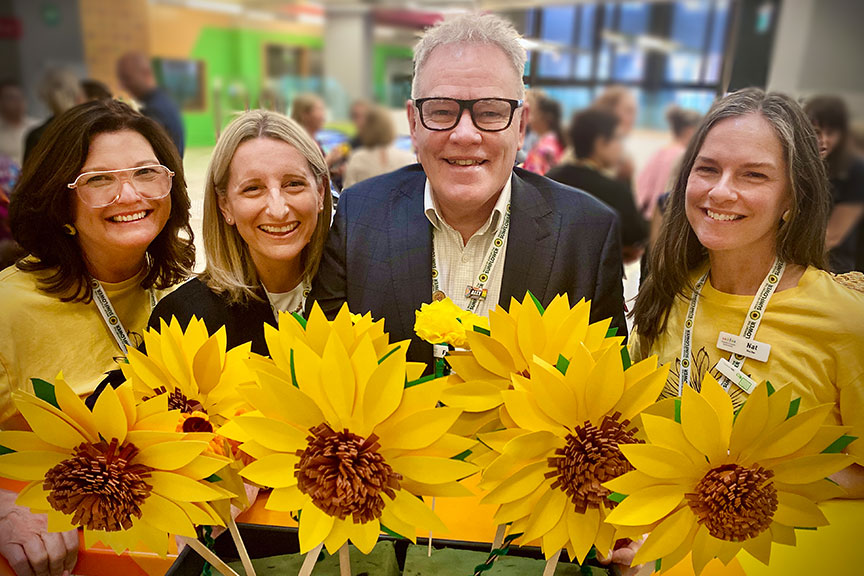
Children’s Health Queensland (CHQ) has officially joined the global Hidden Disabilities Sunflower network – an internationally recognised network that helps to support people with non-visible disabilities.
The Sunflower symbol, typically worn as a lanyard or badge, indicates someone has a non‑visible disability or condition and may require a little extra time, patience, or support.
Conditions may include autism, chronic pain, dementia, anxiety, or sensory sensitivities, among others.
Almost three-quarters of Children’s Health Queensland’s 5,800-strong workforce has now completed tailored training to build their understanding of hidden disabilities, the purpose of the Sunflower symbol and how to support people who choose to wear it.
Children’s Health Queensland Health Service Chief Executive Frank Tracey said becoming a member of the Sunflower network was an important step in creating healthcare environments where everyone felt welcome and respected.
“For many children, young people, families and staff, accessing healthcare or navigating the workplace can involve challenges that we can’t always see,” Mr Tracey said.
“We acknowledge that disability is complex and people experience it differently depending on the barriers they face.
“Joining the Sunflower network is about creating a culture where people feel comfortable communicating when they need additional support, and ensuring our staff know how to respond with care, flexibility and understanding.
“We’re proud to be part of this global movement to create a more inclusive world."
The initiative aligns with CHQ’s Disability Inclusion Action Plan, which aims to ensure children, families, caregivers and employees have equitable access to inclusive, respectful and compassionate healthcare and employment opportunities.
ENDS