
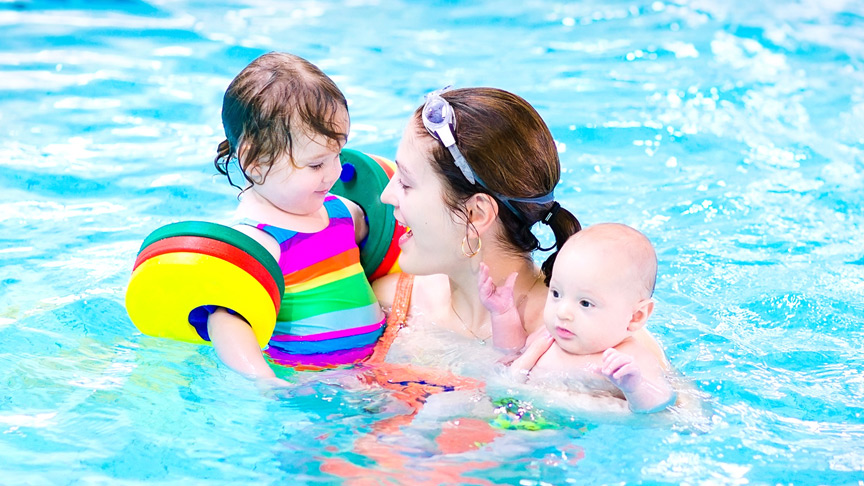
Playing in the pool or at the beach is one of the great joys of growing up in Australia But the water is one of the most dangerous places for kids, particularly very young children.
While drowning is often portrayed in movies or TV shows as being loud, it actually happens quickly and quietly.
Remember these water safety tips to reduce the risk of drowning.
Always watch your kids near water
Constant adult supervision is the only way to keep children safe around water.
Queensland Children’s Hospital paediatric intensive care specialist Dr Paul Holmes said young children were most vulnerable to quick, silent drownings that can unnoticed if they not being constantly supervised.
“Young children have small lungs, which means they can’t hold their breath for very long. So, if they slip under the water, they can drown in a matter of seconds.
“Children who are struggling in the water cannot always wave or call out, and they quietly slip under the surface.
“That’s why constant and close supervision by a responsible adult is crucial when children are in or around water. It’s the only way to keep them safe. Relying on a child to tell adults when they are in trouble does not work., he said
Make sure a responsible adult is actively supervising a child any time they are in, or around the water.
Never rely on older children to supervise younger children.
Ask yourself, who is the designated adult watching the child?
Children with medical conditions such as epilepsy, seizure disorders, autism and asthma are also at a high risk of drowning.
Put away distractions
Drownings can be prevented by reducing or removing distractions.
Many water-related accidents happen when adults are distracted — even briefly.
Phones, conversations or stepping away “just for a moment” can be enough time for a child to get into trouble.
Before heading near water, plan ahead:
- Put your phone away
- Keep towels, snacks and essentials within reach
- Make sure another adult is ready to take over if you need to step away
If you need to leave the area to use the toilet or answer a call, make sure a designated adult is prepared to takeover supervising the child.
Have a plan for at home and away
Restricting your child’s access to water is one of the ways to prevent drowning.
Look around your home and garden. Ask yourself:
- Swimming pool or spa: Does my fence and gate comply with local laws?
- Baths and sinks: Are the kitchen and laundry secure? Have I drained the water immediately after use?
- Ponds: Is the area gated? Is the water source securely covered?
- Buckets: Are full buckets stored away securely? Do I dispose of water in a safe manner?
Away from home, it is important to be aware of water safety practices at high-risk waterways including the beach, rivers, creeks, lakes and dams.
Have a plan to always supervise your child and be aware of environmental risks like the depth, clarity and condition of the water (like waves and rips) and the weather.
Teach your child to be water safe
Swimming lessons are one of the best ways for your child to learn water safety skills.
Children can attend water familiarisation classes from 6 months of age.
Basic swimming skills are usually introduced in lessons for preschool aged children.
Children who know how to swim can still drown so they must always be supervised by an adult near or in the water.
Teach your child to not go near or in the water without an adult.
Learn how to perform CPR
Knowing how to perform CPR can mean the difference between life and death.
The Queensland Ambulance Service (QAS) provides CPR Awareness sessions at Queensland Children’s Hospital (QCH) for the cost of a gold coin donation.
The 90-minute sessions are run by qualified QAS trainers and take place monthly on a Friday.
Useful websites
- Video: #ittakesseconds for a child to drown
- Kids Alive Do the Five
- CPR Awareness Program
- Keep Watch Actions, Royal Life Saving Australia