
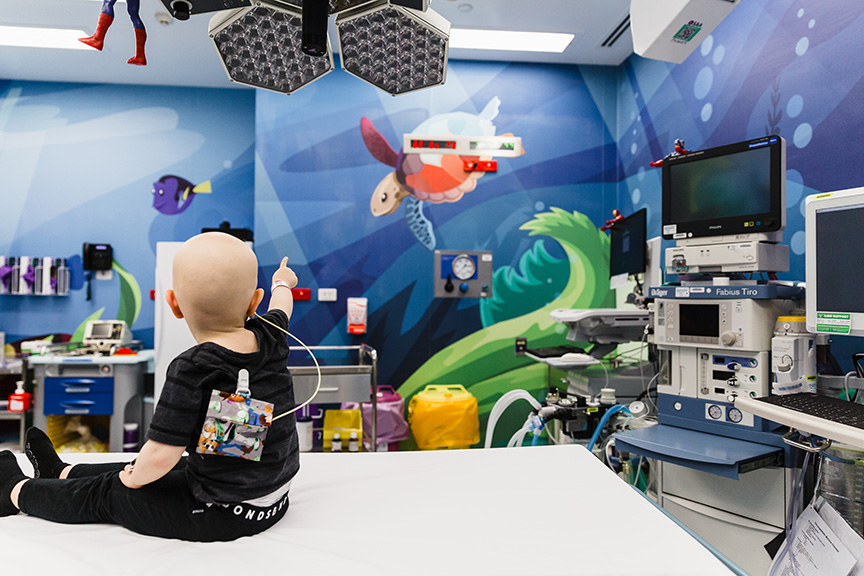
Children’s Health Queensland has partnered with Health Infrastructure Queensland and Arts Queensland to guide the creation of inclusive, culturally safe and healing environments for patients, staff and communities across the state.
The new guideline Arts in Health: Principles and Practice provides a framework for best practice arts in health integration across Queensland Health infrastructure projects. It outlines practical approaches for embedding arts in health into project planning, design, community engagement and delivery processes.
Children’s Health Queensland Arts in Health Strategic Lead and co-author Lynne Seear said the document was created in response to the growing demand from projects seeking to include art as part of their design.
“We have worked alongside other hospital and health services for several years to support the inclusion of art in their facilities, and this resource now makes that process more accessible,” Ms Seear said.
“Art and culture embedded within healthcare spaces can support wellbeing, foster connection, and create calmer, more welcoming environments for patients, families and staff.
“This guide helps translate these benefits into practice, giving teams clear principles to confidently bring art into health infrastructure from the ground up,” she said.
Children’s Health Queensland established the first full-time Arts in Health program in Queensland to help enhance the therapeutic and healing environment of the Queensland Children’s Hospital.
Since 2014, the Children’s Health Queensland Arts in Health program has shaped how creativity is woven into care and increasingly shared its expertise with hospitals and healthcare facilities across the state.
Arts in Health: Principles and Practice outlines 5 key principles for integrating art and culture: person-centred design, cultural safety, co-design, curatorial integrity, and governance and collaboration.
“Importantly, arts in health projects can provide a platform for expression of local identity and cultural heritage including for Aboriginal and Torres Strait Islander peoples, culturally and linguistically diverse (CALD) communities, and artists with lived experience of illness and disability,” Ms Seear said.
“This can foster stronger community engagement and sense of ownership of a facility or space.”
“We hope these guidelines lead to more health facilities across Queensland embracing arts in health from the earliest stages of design, so creativity and culture are not late additions, but a fundamental part of how care environments are built.”
Download a copy of the Arts in Health: Principles and Practice.
Learn more about the Children’s Health Queensland Arts in Health Program.