
Summary
Queensland families can access a range of free services to support their child’s health, development and wellbeing from pregnancy through to the teenage years. Here’s a guide to what’s available.
Did you know about these free health child and youth healthcare services for Queenslanders?
Connecting2u
Connecting2u is a free text messaging service created to provide Queensland parents, caregivers, and families with receive trusted information and tips to boost your child’s health, development, and wellbeing during pregnancy and in the first five years of your child’s life.
Parents can sign up for:
- Pregnancy (antenatal) messages to receive weekly texts about nutrition, health check reminders, self-care and more before your baby is born, and
- Birth to 5 years messaging for regular health advice, tips and reminders aligned with your baby’s growth and development.
There is also culturally tailored messaging for Aboriginal, Torres Strait Islander, Māori and Pacific Islander and Cook Islands families.
How to access:
Expecting parents, parents, caregivers, or other family members with children under 5 years can sign up online. You can opt out any time by replying ‘STOP’ to any of the text messages.
Newborn hearing screenings
Every baby born in a Queensland hospital can have a free hearing screening shortly after birth through the Healthy Hearing program. Identifying a hearing loss early is important because hearing is vital for speech and language development as a child grows. A newborn hearing screen ensures babies born with a hearing loss get the support they need for the best start in life.
How to access:
Most babies will have their hearing screening done while they're in hospital, (it's best to have it done before they're one month old). If the screening wasn’t done before you went home, or it needs to be done again, contact your maternity hospital to arrange one. If you had a home birth, ask your midwife to refer you to a screening service. Learn more about newborn hearing screening.
Community hearing screening clinics
Children and young people aged 9 months to 16 years can get free hearing screening through Community Hearing Screening Clinics. These checks can find hearing problems that may affect speech, learning and development.
How to access:
Parents and carers can book an appointment if they have concerns about their child's hearing, speech or language or learning at any time. Clinics are available at a range of locations across Queensland.
Newborn drop-in community services
Parents and carers of newborns can access drop-in services in community centres across Queensland. Each centre provides different services, but all will generally provide free parenting and infant development information, breastfeeding support, baby weighing facilities, and feeding help and support.
How to access:
Contact your nearest Hospital and Health Service centre for your nearest newborn drop-in services.
Child health clinics
Local child health clinics in communities across Queensland provide free parenting information, health and development checks (as listed in a child’s Personal Health Record – known as the ‘Red Book’) and support for parents, carers and children. The clinics offer advice in general parenting, child development, feeding and nutrition, and some provide free vaccinations for children (0 to 4 years) as per the National Immunisation Program Schedule.
How to access:
Contact your nearest Hospital and Health Service centre for days and times hours of your nearest child health clinics. Most services are offered on a drop-in basis, but appointments are needed for child health and developmental checks.
Healthy Kindy Kids
Children who attend Queensland kindergartens that display the Queensland Government approved kindy tick, can get free vision, hearing, speech and language screening as part of the Healthy Kindy Kids program. Vision, hearing, speech and language issues can impact your child’s future learning at school. Screening helps find any issues early so your child can get the right support services and treatment.
Healthy Kindy Kids is rolling out statewide and will be offered across Queensland by the end of 2028. Your local Healthy Kindy Kids team will contact your child's kindergarten when the program starts in your area.
How to access:
Your child's kindergarten will let you know when the program is coming a few weeks before the visit. You’ll need to complete a consent form if you want your child to be screened.
If your child isn’t able to attend on the dates they’re coming, they can still get a 4-to-5-year health check at your local child and family health service or your GP.
If you have any questions about the Healthy Kindy Kids program, email healthykindykids@health.qld.gov.au
Prep vision screening
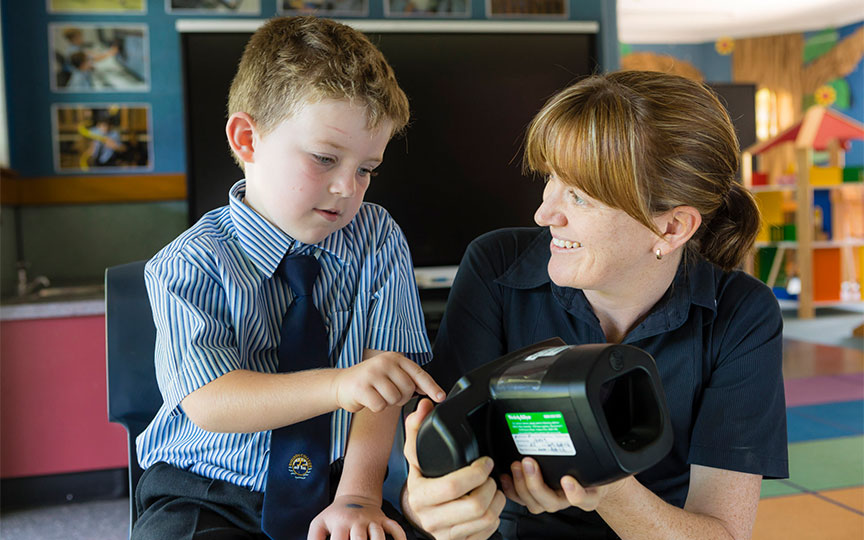
The Primary School Nurse Health Readiness Program provides free vision screening for children in Prep in state, catholic and independent schools across Queensland to check for common eye conditions, such as amblyopia (lazy eye), which affects about 2 in every 100 children. It’s also the leading cause of preventable blindness in Australian children. Early treatment for eye conditions can help protect a child’s vision and give them the best start to their their learning and development. Watch this video to learn more about prep vision screening and why it's important.
How to access:
Your child’s school will send/email you a paper or online consent form in the weeks before the screening nurses will visit. If you’d like to have your child’s vision screened, fill in the consent form as soon as possible. Your child cannot be screened without your consent.
If your child missed getting their vision screened at school or if your child is home-schooled, you can find out about attending one of our catch up vision screening clinics.
Ellen Barron Family Centre
The Ellen Barron Family Centre (EBFC) is a free specialist early parenting service offering residential and virtual programs for families with babies and children aged 0 to 3 years. Programs include education sessions and support for general parenting, responsive feeding, breastfeeding, bottle feeding and solids, responsive settling, and child development and behaviour. The service helps families build confidence and learn strategies they can use at home. Families can also access a range of free online responsive feeding and settling videos and resources here.
How to access:
Families from Queensland, northern New South Wales and the Northern Territory can access programs with a referral from 13 HEALTH (13 43 25 84), a GP, child health nurse or other health professional. Parents and carers should first seek support from their local child and youth community health service before asking to be referred to the Ellen Barron Family Centre.
Deadly Ears
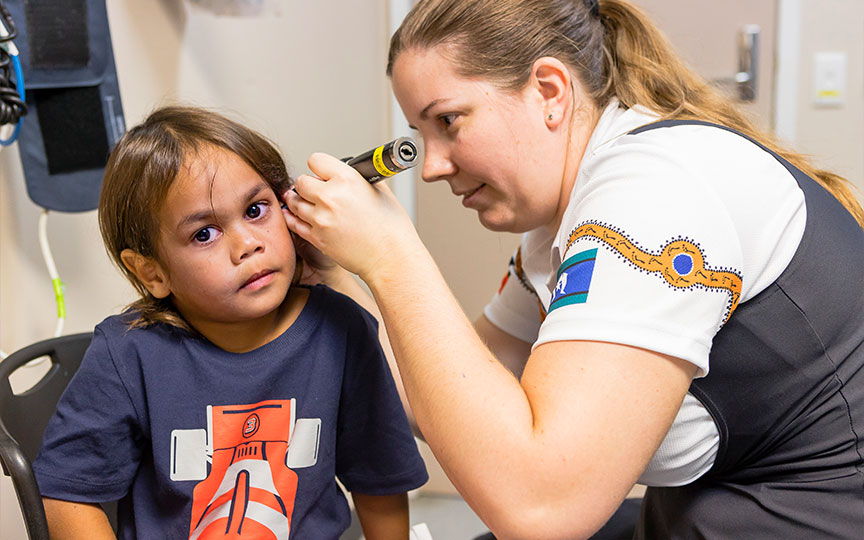
Deadly Ears works with First Nations communities to provide free ear and hearing health checks, and specialist ear, nose and throat (ENT) surgical services for children in regional and remote communities across Queensland. The outreach program aims to reduce hearing disease and hearing loss in Aboriginal and Torres Strait Islander jarjums (children). Deadly Ears teams travel to Charleville, Cherbourg, Woorabinda, Mount Isa, Doomadgee, Palm Island, St George and the Torres Strait. They also work with local health, education and community services to support children's learning, development and wellbeing.
How to access:
Children need a referral from either a primary or a community health service to visit one of the clinics. Call Deadly Ears on 07 3310 7709 for more information.
School-based youth health nurses
School-based youth health nurses are based in state high schools across Queensland to give students easy access to health information and support. The free, voluntary, and confidential service means students can talk privately with a qualified youth health nurse about a range of health and lifestyle matters, including healthy eating, exercise, relationships, sexual health, alcohol and drug use and mental health and wellbeing. Youth health nurses do not provide medical treatment or counselling, but they can answer questions and connect young people with the right services and support if needed. Learn more about the School-Based Youth Health Nurse Service.
How to access:
Young people can book an appointment with their school’s youth health nurse through the school office.
Head to Health Kids - Queensland
Head to Health Kids – Queensland (H2HK-Q) services offer a range of specialist supports and services for children under 12 years of age experiencing developmental, behavioural or emotional issues that may affect their mental health and wellbeing. Support is also provided for their families/carers if required. Services are free to access, with priority for those children and families who present with multiple, co-occurring and complex vulnerabilities.
H2HK-Q is not a crisis or emergency service. For urgent support, call Queensland Health's 1300 MH CALL service on 1300 642 255 or Kids Helpline on 1800 551 800.
How to access:
H2HK-Q services are initially available in two regions, Greater Brisbane and the Gold Coast.
Families seeking access to H2HK-Q services can contact the Medicare Mental Health phone service on 1800 595 212 (8.30am to 5pm, Monday to Friday). Simply call, share your postcode and the team will ask some brief questions to help find the right support for you. Your child doesn't need a referral from a GP or another service provider, but if they refer you, they can also help support your child's care.
Dental services
Free public dental services are delivered via a range of facilities including mobile dental clinics, school dental clinics and community dental clinics. For children to be eligible for free public dental care they must:
- be a Queensland resident or attend a Queensland school
- be eligible for Medicare
- meet at least one of the following criteria
- be aged 4 years or older and have not completed Year 10
- be eligible for the Medicare Child Dental Benefits Schedule
- hold, or be listed as a dependent on, a valid Centrelink concession card.
How to access:
To check if your child is eligible, make an appointment or be added to a waiting list, contact your local public dental service.
Queensland Poisons Information Centre helpline (13 11 26)
The Queensland Poisons Information Centre helpline (13 11 26) provides free poisoning first aid advice 24 hours a day, 7 days a week. Call the hotline to speak to specially trained pharmacists who can provide first aid advice in a poisoning emergency and decide if further medical care is needed.
Call the helpline if you think someone has:
- swallowed something poisonous
- been bitten or stung by a poisonous animal or insect
- breathed in a poison
- touched a poisonous substance, such as a chemical or plant.
Helpline staff can also provide poisoning prevention information and education.
How to access:
Simply call 13 11 26, 24hours a day, 7 days a week from anywhere in Australia.
Important: If someone has collapsed or is not breathing, call Triple Zero (000) first. Only call the Poisons Information Centre for advice once help is on the way.
13 HEALTH (13 43 25 84)
13 HEALTH (13 43 25 84) is a free phone service available 24 hours a day, 7 days a week. You can speak with a registered child health nurse for confidential, qualified health advice.
In an emergency, always call Triple Zero (000).
ENDS