
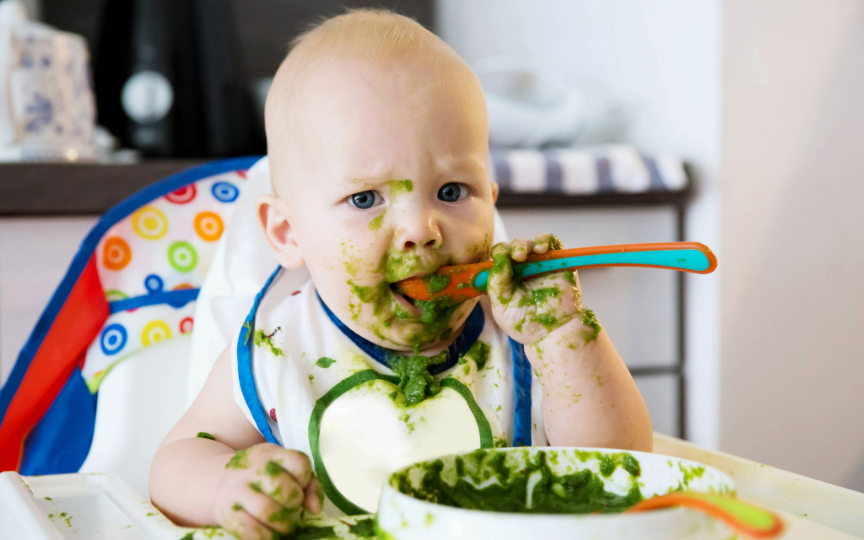
One minute your baby is watching you eat. The next, they’re reaching for your toast, grabbing your spoon, and showing they’re ready to sample what’s on the family’s menu at mealtimes.
Starting solids is an exciting milestone, but it’s normal to have questions. When should you start? What foods should you offer first? How do you know if your baby is ready?
The good news is introducing family foods doesn’t have to be complicated! With a little patience and plenty of practice, you can help your baby build health eating habits from the start.
Is my baby ready?
Most babies start to show signs of being ready for solids at around six months of age but should not start before four months.
Signs your baby might be ready:
- Good head and neck control
- Sitting upright with support
- Showing interest in food
- Opening their mouth when offered food.
Every baby develops at their own pace, so follow their cues.
Start small and keep it relaxed
Introducing solids is about tasting, learning and expanding options, not eating lots of food.
Try:
- Offering food when your baby is calm and happy
- Starting with 1-2 teaspoons after a milk feed
- Letting your baby decide how much they want to eat
- Trying again another day if they’re not interested.
Expect some mess! Exploring food with their hands is an important part of learning.
What foods should I offer?
Start with iron-rich foods, which are important for growth and brain development like:
- Iron-fortified infant cereal
- Minced meat, chicken and fish
- Eggs that are well cooked and mashed
- Legumes like beans and lentils
- Tofu
As your baby becomes more confident with solids, offer a variety of healthy foods with different textures that match their stage of development. This may include:
- Pureed foods
- Mashed foods
- Soft foods with lumps (such as mashed avocado or mashed banana with soft, small pieces)
- Finger foods (such as soft fruit slices, steamed veggie sticks, or toast fingers)
Foods to avoid
Avoid:
- Honey before the age of 12 months
- Soft drinks, cordials, and juices
- Whole nuts and similar hard foods
- Foods with added salt or sugar
Cow’s milk before the age of one
Do not give your baby cow’s milk as a main drink before the age of one. Their digestive system is still developing, which means, they can’t process it.
While cow’s milk is a good source of important nutrients like protein, calcium and vitamin D, it’s naturally low in iron (and much lower than breast milk and formula) and doesn’t meet the iron requirements or balance of nutrients for growing babies.
Cow’s milk also fills your baby’s belly and leave less room for breast milk and formula, which should be their main sources of nutrition through the first year. However, it is important to introduce milk in foods, like yogurt and cheese, around 6 months of age to help prevent an allergy from developing (see ‘Introducing allergens’ below).
Introduce allergens
When your baby is ready for solids, introduce common allergy-causing foods such as egg, peanut, dairy, wheat, soy, sesame, fish, shellfish and tree nuts during their first year. This helps reduce the risk of food allergies. Offer one new allergy food at a time and watch your child for any signs of a reaction. Once a food has been introduced safely, continue including it in your baby's meals at least once a week. Learn more about safely introducing common allergen-causing foods to your baby.
Be careful of choking
When your baby is getting used to chewing and eating solids, there is a higher risk of choking. Always supervise your baby while they’re eating. Some common foods that you should be extra careful with are:
- Whole grapes
- Cherry tomatoes
- Nuts
- Popcorn
- Hard raw fruit and vegetables.
To reduce the risk of choking, cut round foods lengthways and serve foods in a way that matches your baby’s age and ability.
And finally…
Starting solids is a journey. Some babies are keen to try everything, while others need more time. Follow your baby’s lead, keep mealtimes positive, and remember that learning to eat takes practice.