
Australia is home to more than 200 species of snake — including some of the most venomous in the world.
While not all snakes are dangerous, it’s impossible to know for sure in the moment, so every bite should be treated as an emergency.
Children are especially at risk because their smaller bodies can be affected more quickly by venom.
If you suspect your child has been bitten, stay calm, act fast, and seek medical help immediately.
Snakes on the move
Snakes are commonly seen in the warmer months in Australia (from September until April), but they can be encountered at any time of the year - during the day or night.
Signs and symptoms of a snake bite
Snake bite symptoms can vary depending on the type of snake. General symptoms may include:
- Bite marks (can range from visible holes to a small scratch)
- Swelling
- Bleeding
- Severe pain.
As snake venom spreads through the blood, other symptoms can develop, such as:
- Difficulty breathing
- Dizziness and confusion
- Irregular heartbeat
- Blurred vision
- Nausea (vomiting)
- Muscle weakness or paralysis
Anaphylaxis and snake bites
Some children may have severe allergic reactions to snake bites, known as anaphylaxis.
Signs of anaphylaxis include:
- wheezing, difficult, or noisy breathing
- swelling of the tongue
- swelling or tightness in the throat
- a persistent cough
- difficulty talking or a hoarse voice
- dizziness
- nausea (vomiting)
- becoming pale and floppy in young children
- collapsing.
If your child has signs of anaphylaxis, you should:
- follow your child’s ASCIA action plan for anaphylaxis if you have one.
- use an EpiPen® or Anapen®, if there is one available.
- call Triple Zero (000) for an ambulance.
How to treat a bite
Snake bites are a medical emergency.
If a snake has bitten your child, call Triple Zero (000) immediately. If your child collapses or stops breathing, start resuscitation (CPR).
Learn how to perform CPR on the Healthdirect website.
First aid
- Move your child to a safe location.
- Lie your child down to stop them from walking or moving around until the ambulance arrives. Keep their body still and don’t remove their clothing. Moving them may cause more venom to enter the blood stream.
- Take off any rings, watches, or bracelets from the bitten limb before it starts to swell.
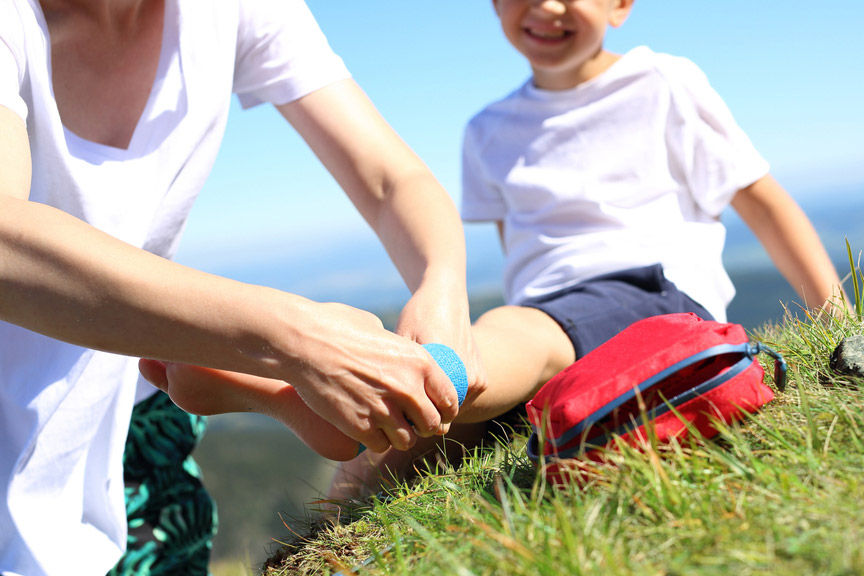
- Apply a pressure bandage to any bite on the legs or arms as soon as possible. A splint should be applied over the bandage to further immobilize the limb.
To apply a pressure bandage:
- wrap a firm, wide elastic bandage over the bite.
- wrap a firm, wide elastic bandage over the entire limb – fingers to shoulder, toes to hip.
- use a splint or another hard object to keep the limb straight.
If you do not have an elastic bandage, you can use clothing, towels, socks or stockings.
Pressure bandaging prevents the venom from travelling further into the body. The bandages should be wrapped firmly but not so tight that your child feels numb or their skin changes colour.
- If a bite occurs to the chest, abdomen, pelvis or back, apply firm pressure over the bitten area. Do not restrict chest movement.
- For head and/or neck bites, keep your child still and calm while waiting for medical help to arrive. Don't apply any first aid to the bitten area.
Do not:
- wash the bite.
- apply a tourniquet.
- cut the area.
- try to suck any venom or poison out of the area.
- try to catch or kill the snake.
Prevention
Teaching your child to avoid snakes is the best way to prevent bites. Snakes bite to defend themselves, so bites often happen when a snake is accidentally picked up, threatened, or stepped on.
If your child encounters a snake, they should:
- stay calm,
- back away to a safe distance, and
- let the snake move away on its own.
You can help prevent snake bites by:
- Teaching your child to never touch snakes.
- Wearing appropriate, closed-in shoes.
- Keeping your lawns mowed and gardens clear of rubbish and piles of leaves.
- Being mindful where you walk, put your hands and sit when outdoors.
- Use a torch when walking outside at night.
Snake removal
Never attempt to remove a snake from your home on your own. Always get a professional snake catcher who can safely identify, catch, and remove the snake for you.
For more information
Queensland Poisons Information Centre - Snake bites | Queensland Poisons Information Centre (health.qld.gov.au)