
View resources
Key points
- Septic arthritis is an orthopaedic emergency and should be suspected in any limping child with severe, localised joint pain and fever.
- Careful assessment (history and examination) can identify red flags suggestive of more serious pathology (which require investigation and specialist referral).
- Transient synovitis is a benign condition and the most common cause of an acute limp in children.
Purpose
This document provides clinical guidance for all staff involved in the care and management of a child presenting to an Emergency Department (ED) with an unexplained limp in Queensland. This guideline does not cover the management of all conditions that can present with limp but focuses on identifying the more common serious conditions (including septic arthritis) that require timely specialist referral.
This guideline has been developed by senior ED clinicians across Queensland, with input from Orthopaedic and Rheumatology specialists, Queensland Children’s Hospital, Brisbane. It has been endorsed for use across Queensland by the Queensland Emergency Care of Children Working Group in partnership with the Queensland Emergency Department Strategic Advisory Panel and the Healthcare Improvement Unit, Clinical Excellence Queensland.
Introduction
Normal (adult-type) gait is a smooth, rhythmic near-effortless movement with 60% of time spent in stance phase (from heel strike through stance to toe off) and 40% in swing phase. The immature toddler gait shows short stride length, fast cadence, slow velocity and wide base (Payares-Lizano, 2020)
A limping gait is any variation from normal gait. Most common variations include:
- Antalgic: shortened stance phase to limit time spent weight bearing
- Equinus: toe-walking, can be habitual, idiopathic, caused by calf pain, clubfoot, leg length discrepancy or cerebral palsy
- Trendelenburg: shifting of weight to affected side during stance due to weak hip abductors. Can be seen in Legg-Calve-Perthe, developmental dysplasia of the hip, slipped capital femoral epiphysis, muscular dystrophy and hemiplegia cerebral palsy
- Circumduction: leg swings laterally to avoid tripping in limb-length discrepancy or foot or ankle pathology
Limp in children is a single sign of an underlying pathology. Children present to ED with a wide spectrum of possible causes for a limp ranging from benign to life or limb threatening conditions. Causes of limp can be limb related, including from joint, bone and soft tissue pathology as well as not limb related, eg neurological, intra-abdominal etc. Underlying pathologies can be stratified by aged (table 1).
Septic arthritis commonly occurs in children aged less than three years but can occur at any age.
Consider septic arthritis in any child with joint pain and fever.
Common causes of acute limp by age and order of incidence
| Frequency | Less than 1 year | 1- 4 years | 5 -10 years | Over 10 years |
|---|---|---|---|---|
Most common |
|
|
|
|

Other differentials include, but are not limited to, spina bifida, cerebral palsy, muscular dystrophy, rheumatological conditions, abdominal and genital pathology and neurological conditions. These diagnoses are unlikely to present with the only symptom being a limp.
Of the broad range of differentials there are six diagnoses that require early intervention and treatment and therefore are the six key diagnoses not to miss9.
- Septic arthritic
- Osteomyelitis
- Malignancy
- Toddler’s fracture
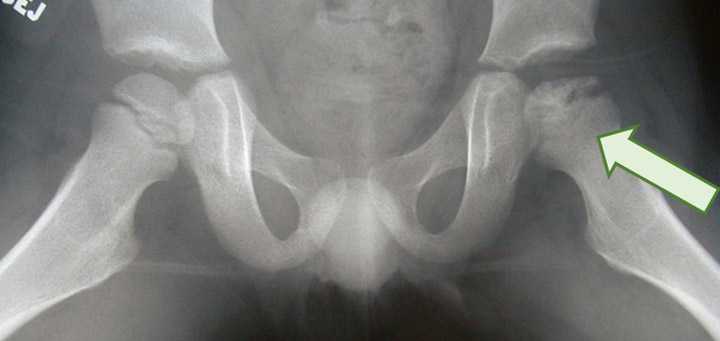
- Legg-Calve-Perthes Disease
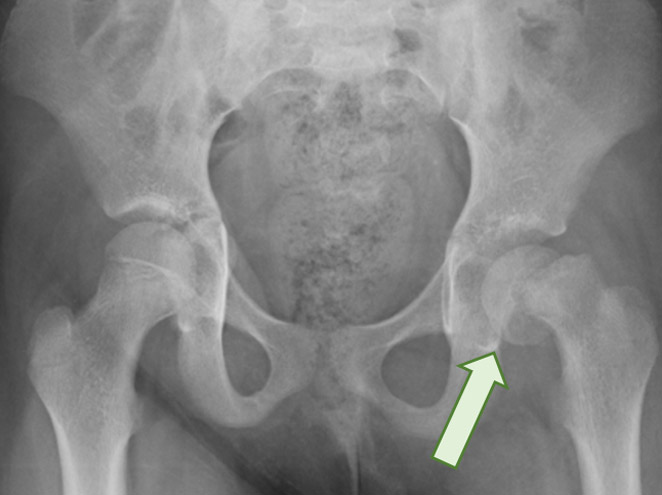
- Slipped Upper Femoral Epiphysis
- Non-Accidental Injury
The focus of this guideline is to differentiate the children who have a serious underlying pathology requiring urgent or emergent intervention from the larger group who do not have a serious cause for their limp. Transient synovitis is a common, self-limiting cause of limp in children presenting to the emergency department.
Assessment
Given the spectrum of conditions that cause a child to limp, the differential remains broad and a unifying diagnosis can be elusive. In most cases, a thorough history and physical examination can significantly narrow the differential. Additional investigations may be required to delineate between conditions with similar symptoms.
History
- Fever >=38.5
- Recent throat or skin infection
- Systemic symptoms: weight loss, night sweats, anorexia, lethargy
- Possible NAI
History taking should include specific information on:
- onset and course of limp
- history of trauma
- pain history - including localisation, magnitude, pain migration, number of joints involved, exacerbating/ relieving factors
- constitutional symptoms such as fevers, malaise, anorexia, weight loss, night sweats
- Bleeding history- excess bruising/bleeding, prolonged/frequent epistaxis, prolonged bleeding after invasive procedures.
- preceding illness including sore throat or skin infections
- previous or recurrent injuries (haemophilia, or should raise suspicion of NAI especially in infants and younger children)
- social history
- Indigenous status
- developmental delay
Examination
- Abnormal vital signs
- Inability to weight bear or severe, localised joint pain
- Overweight adolescent
Clinical examination should include:
- general examination with attention to vital signs and appearance, bruising and lymphadenopathy
- neurological examination - symmetry of limbs, muscle atrophy, power, tone, reflexes and coordination, including ataxia
- joint examination (including joint above and below) assessing swelling, tenderness, warmth, active and passive mobility
- point bony tenderness (may indicate osteomyelitis)
- abdomen, scrotum and spine examination to exclude referred pain from other possible causes
Investigations
Investigations required will depend on the assessment. Children presenting within a few days of onset of the limp and with no red flags may not require any investigations.
The following investigations can be considered depending on history and examination findings.
Investigations for a child with a limp
| Investigation type | Utility |
|---|---|
| Plain X-rays |
|
| Joint ultrasound |
|
| Specialised imaging |
|
| Full blood count |
|
| C reactive protein |
|
| Erythrocyte sedimentation rate |
|
| Coagulation |
|
| ASOT/Anti DNase |
|
| Blood cultures |
|
| Throat/wound swab M/C/S |
|
| ECG |
|
Considerations in children
- physical examination can be challenging in younger children – observation of how they move, weight bear, crawl, walk, run, jump and squat will be very helpful in terms of localising potential pathology
- neurological weakness can present as a limp.
- fever greater than or equal to 38.5°C
- recent throat or skin infection
- inability to weight bear or severe, localised joint pain
- bony pain
- systemic symptoms such as weight loss, night sweats
- possible unwitnessed trauma/NAI
- overweight adolescent
Suspect septic arthritis in child with a fever greater than 38.5°C, acute onset of severe, localised joint pain and difficulty weight bearing.
Seek urgent senior emergency/orthopaedic advice as per local practice if septic arthritis is suspected.
Diagnosing septic arthritis
Definitive diagnosis is confirmed on positive joint aspirate by orthopaedic surgeons in theatre. In the ED, Kocher’s criteria6-8 can assist in determining the likelihood of septic arthritis.
| Predictors | Probability of septic arthritis | |
|---|---|---|
| Number of predictors | Probability of septic arthritis |
| 0 | 0.2% | |
| 1 | 3% | |
| 2 | 40.0% | |
| 3 | 93.1% | |
| 4 | 99.6% | |
There is a modified Kocher which also uses a CRP of >20.
Management
Septic arthritis is an orthopaedic emergency. Suspect in any limping child with severe, localised joint pain and fever.
Refer to the flowchart [PDF 438.37 KB] for a summary of the recommended assessment and investigation for a child presenting to ED with an unexplained limp.
The appropriate management will be guided by the outcome of the assessment.
If suspected septic arthritis and unwell or septic, give urgent empiric antibiotics after blood cultures obtained. Do not delay whilst waiting for operative intervention. This management should be as per statewide sepsis protocols.
Prompt referral to orthopaedic service as per local practice is required for all children with concerns of serious underlying pathology.
Consider seeking orthopaedic advice as per local practice for a child with a persistent limp (greater than one week) and a normal X-ray.
| Septic arthritis | |
|---|---|
| History |
|
| Examination |
|
| Diagnosis |
|
| Management |
|
| Osteomyelitis | |
|---|---|
| History |
|
| Examination |
|
| Diagnosis |
|
| Management |
|
If unwell or septic, give urgent empiric antibiotics after blood cultures obtained. Do not delay whilst waiting for operative intervention. This management should be as per statewide sepsis protocols.
Malignancy
| Malignancy – Osteosarcoma, leukaemia, lymphoma | |
|---|---|
| History |
|
| Examination |
|
| Diagnosis |
|
| Management |
|
Toddler’s fracture
| Tibial spiral fracture | |
|---|---|
| History |
|
| Examination |
|
| Diagnosis |
|
| Management |
|
Legg-Calve-Perthes Disease
| Perthes disease | |
|---|---|
| Summary |
|
| History |
|
| Examination |
|
| Diagnosis |
|
| Management |
|
Slipped Upper Femoral Epiphysis
| Slipped upper femoral epiphysis (SUFE) | |
|---|---|
| Summary |
|
| History |
|
| Examination |
|
| Diagnosis |
|
| Management |
|
The focus of this guideline is to differentiate the children who have a serious underlying pathology requiring urgent or emergent intervention from the larger group who do not have a serious cause for their limp. Other important causes of limp are included here. Be aware this list is not exhaustive.
| Transient synovitis | |
|---|---|
| History |
|
| Examination |
|
| Diagnosis |
|
| Management |
|
| Acute Rheumatic Fever | |
|---|---|
| History |
|
| Diagnosis |
|
| Management |
|
| Inflammatory Arthritis | |
|---|---|
| History |
|
| Management |
|
| Genitourinary and Intraabdominal Cause | |
|---|---|
| Summary |
|
| Neurological Cause | |
|---|---|
| Summary |
|
Escalation and advice outside of ED
Clinicians can contact the services below if escalation of care outside of senior clinicians within the ED is needed, as per local practices. Transfer is recommended if the child requires a higher level of care.
Child with septic arthritis (requires time-critical care)
| Reason for contact | Who to contact |
|---|---|
| For urgent advice and referral of child with suspected septic arthritis | Contact the onsite/local orthopaedic service. The onsite/local paediatric service may assist with emergency management. |
Non-critical child
| May include children with |
|---|
|
| Reason for contact | Who to contact |
|---|---|
| Advice (including management, disposition or follow-up) |
Follow local practices. Options:
|
| Referral | First point of call is the onsite/local orthopaedic service |
Inter-hospital transfers
| Do I need a critical transfer? |
|
| Request a non-critical inter-hospital transfer |
|
| Non-critical transfer forms |
|
Disposition
When to consider discharge from ED
Most children who do not have serious underlying pathology can be managed supportively at home, with appropriate advice around when to represent for review at either their GP or the ED.
Parents should be advised to represent for medical review (GP or ED) if the child:
- develops a fever
- worsening joint pain, nocturnal pain, refusal to weight bear despite analgesia
- is not improving after 3 days or symptoms persist for greater than 14 days
- becomes tired, lethargic or unwell in themselves
Follow-up
Recommended follow-up is based on the outcome of the assessment. Follow-up is not routinely required for children for whom no serious underlying pathology is suspected.
When to consider admission
As per advice for children requiring specialist referral.
Consider admission for any child who cannot weight bear and is no longer mobile.
Related documents
- Paediatric Sepsis Pathway [PDF 4229.69 KB]
- Paediatric Bone and Joint Infection management Guideline
- CHQ-GDL-01057 Antimicrobial treatment: Antibiotic duration and timing of the switch from intravenous to oral for common bacterial infections in children - Paediatric Guideline [PDF 647.54 KB]
- Haemophilia – Emergency Management in children flowchart
- Acute Rheumatic Fever skill sheet [PDF 578.45 KB]
- Limp fact sheet
- Kastrissianakis K, Beattie TF. Transient synovitis of the hip: more evidence for a viral aetiology. European journal of emergency medicine: official journal of the European Society for Emergency Medicine.2010;17(5):270-3.
- Baskett A, Hosking J, Aickin R. Hip radiography for the investigation of nontraumatic, short duration hip pain presenting to a children's emergency department. Pediatric emergency care. 2009;25(2):78-82.
- Fischer SU,Beattie TF.The Limping Child: epidemiology, assessment and outcome.Journal of Bone and Joint Surgery.1999;81:1029-34
- Clarke NMP, Kendrick T. Slipped capital femoral epiphysis. BMJ. 2009;339.
- Plumb J, Mallin M, Bolte RG. The role of ultrasound in the emergency department evaluation of the acutely painful pediatric hip. Pediatric emergency care. 2015;31(1):54-8
- Herman MJ, Martinek M. The limping child. Pediatrics in review/American Academy of Pediatrics. 2015;36(5):184-95
- Kocher MS,Mandiga R,Zurakowski D,Barnewolt C,Kasser JR.Validation of a Clinical Prediction Rule for the Differentiation Between Septic Arthritis and Transient Synovitis of the Hip in Children.The Journal of Bone & Joint Surgery.2004;86(8):1629-35
- Kocher MS ZD, Kasser JR. Differentiating between septic arthritis and transient synovitis of the hip in children: an evidence-based clinical prediction algorithm. J Bone Joint Surg Am. 1999;81(12):1662-70.
- Davis T, Lawton B, Klein K, Goldstein H, Tagg A. Walking in circles: The limping child. Emerg Med Australas. 2017 Aug;29(4):380-382. doi: 10.1111/1742-6723.12830. Epub 2017 Jul 5. PMID: 28681516.
- Payares-Lizano M. The Limping Child. Pediatr Clin North Am. 2020 Feb;67(1):119-138. doi: 10.1016/j.pcl.2019.09.009. PMID: 31779828.
- ARF and RHD Guideline 2025 rhdaustralia.org.au/wp-content/uploads/2025/09/Australian-ARF-RHD-Guideline-2025_August_1.pdf
Document ID: CHQ-GDL-60007
Version number: 5.0
Risk Rating: Low
Approval date: 28/04/2026
Effective date: 29/05/2026
Review date: 28/04/2031
Executive sponsor: Executive Director Medical Services
Author/custodian: Queensland Emergency Care Children Working Group
Applicable to: Queensland Health medical and nursing staff
Document source: Internal (QHEPS) + External
Authorisation: Chief Operating Officer
Keywords: Limp, septic arthritis, Perthes, SUFE, Toddler’s fracture, rheumatic fever, 00733, paediatric, emergency, guideline, children, 60007
Accreditation references: NSQHS Standards (1-8): 1, 8
This guideline is intended as a guide and provided for information purposes only. View full disclaimer.
This governance document has been human rights compatibility assessed. Limitations identified were deemed justifiable indicating reasonable confidence that, if adhered to, there are no implications arising under the Human Rights Act 2019.