
View resources
Key points
- Oesophageal button batteries (BB) require endoscopic removal as soon as possible and preferably within two hours of ingestion to avoid serious complications including death.
- Seek urgent Paediatric Gastroenterology advice (onsite or via (Retrieval Services Queensland) RSQ) for any child with suspected or confirmed BB ingestion in ANY location.
- Seek the most senior assistance available onsite to manage airway compromise as needed (such as Critical Care/ ENT/ Anaesthetics).
- Seek urgent ENT advice (onsite or via RSQ) for a child with a history of foreign body ingestion and inspiratory stridor, cough, wheeze, or inability to swallow secretions.
- Seek urgent Paediatric Surgical advice (onsite or via RSQ) for a child with suspected gastrointestinal obstruction or perforation.
- While approximately 85% of ingested foreign bodies that reach the gastrointestinal tract pass spontaneously, those that become impacted can cause significant harm and even death.
Purpose
This document provides clinical guidance for all staff involved in the care and management of a child presenting to an Emergency Department (ED) in Queensland with a suspected or confirmed ingested foreign body.
This guideline has been developed by Senior Paediatric Emergency Physicians across Queensland, with input from ENT, Surgery and Gastroenterology, Queensland Children’s Hospital, Brisbane. It has been endorsed for use across Queensland by the Queensland Emergency Care of Children Working Group in partnership with the Queensland Emergency Department Strategic Advisory Panel and the Healthcare Improvement Unit, Clinical Excellence Queensland.
Introduction
Ingested foreign bodies are more common in the following children:
- aged six months to three years
- pica
- intellectual impairment
- with older siblings
Commonly ingested objects include coins, small toys and household objects. Older children and adolescents with psychiatric problems may intentionally ingest non-food, potentially harmful items.
While most foreign bodies (85%) that reach the gastrointestinal tract (GI) pass spontaneously,1 those that become impacted are at risk of causing significant harm and even death. An estimated 10-15% of objects require endoscopic removal with less than 1% needing further surgical intervention.2
Objects may lodge in areas of physiological narrowing in the oesophagus including the upper and lower oesophageal sphincter and level of the aortic arch.3 Impaction in other areas of the oesophagus may indicate underlying pathology, such as eosinophilic oesophagitis.
Complications of ingested foreign bodies include:
- complete or partial oesophageal obstruction in immediate phase
- oesophageal perforation which may present with neck swelling, crepitus +/- pneumomediastinum
- erosion of surrounding structures leading to potentially fatal tracheo-oesophageal or aorto-oesophageal fistula
- strictures
- weight loss due to feeding difficulties or recurrent aspiration in delayed diagnosis
- intestinal obstruction or injury if object lodges more distally.
Button batteries
The incidence of button battery ingestions resulting in significant morbidity or death is increasing. The majority of ingestions occur in children aged from one to five years but have also occurred in younger children (possibly fed batteries by siblings) and older children.
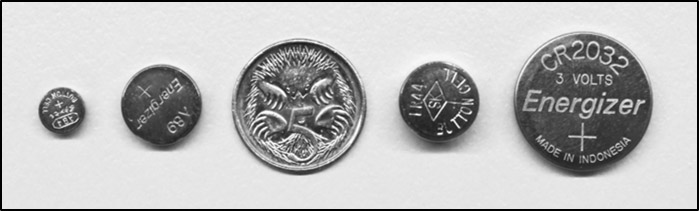
For the majority of cases with severe outcomes, diagnosis was delayed as the event was unwitnessed and the clinical presentation was non-specific.
Be vigilant for the risk of button battery ingestion in a child presenting to ED. A denial of ingestion in a child of any age cannot exclude it.
There are two main mechanisms by which button batteries can cause necrosis:
- where there is sufficient retained battery charge, hydrolysis and creation of hydroxide ions in adjacent tissues leads to mucosal burn at battery’s negative pole
- direct pressure
Oesophageal perforation has been reported within two hours of ingestion. Further erosion of structures can result in fistulae (tracheo-oesophageal / into adjacent vessels). Aorto-oesophageal fistulae can be fatal. Despite prompt removal, the risk of injury can continue up to weeks post-ingestion due to residual alkali and weakened tissues.4
Damage is proportionate to charge. Spent batteries greater than 15mm diameter may still have sufficient residual charge to cause injury.
Magnets
Magnets pose a risk if ingested in multiples or with other ferrous objects (including batteries) as they may attract across layers of bowel leading to pressure necrosis, fistula development, volvulus, perforation, infection or obstruction. Ulceration of the mucosa may occur within eight hours.
Superabsorbent polymers (expandable foreign bodies)
Toys and beads composed of superabsorbent polymers are designed to expand when placed in water so can expand following ingestion when contact is made with gastrointestinal fluids introducing the risk of obstruction.
Food bolus impaction
Oesophageal soft food bolus impaction is rare in children but can occur in children with eosinophilic oesophagitis or prior oesophageal surgery such as oesphageal fistula.
Assessment
Conduct an initial assessment of airway, breathing and circulation as per APLS guidelines and undertake appropriate action.
Button batteries and paired magnets require immediate removal to prevent necrosis of surrounding tissue. These ingestions can be fatal if not managed urgently.
When to suspect an ingested foreign body
Most children with an ingested foreign body are asymptomatic. A history of ingestion may be reported by the child or the caregiver. Where the history of the foreign body ingestion is unknown, children may present with non-specific symptoms. This makes diagnosis difficult.
Ingested foreign body must be considered in children presenting with the following symptoms regardless of history of ingestion:5,3,2
- drooling / pooling secretions
- odynophagia / dysphagia
- food refusal / poor feeding
- retrosternal pain / grunting (may be due to chest pain in preverbal child)
- coughing / choking
- cyanotic episode
- stridor / wheezing
- vomiting or regurgitation
- unexplained gastrointestinal bleeding
Consider the possibility of foreign body ingestion in a pre-verbal child with sudden onset of symptoms.
All children with suspected foreign body ingestion should be kept nil by mouth until fully assessed.
History
Initial questioning should identify the chance of a high risk ingestion to enable early referral.
Questioning should include the following:
- time of ingestion – crucial for button battery or multiple magnet ingestion
- specific details on the ingested foreign body including:
- size – objects greater than 2cm in diameter are unlikely to pass through the pylorus or ileocaecal valve, objects greater than 6cm in length often become impacted in the ileocaecal region
- nature and shape– sharp objects carry risk of perforation; superabsorbent polymers pose risk of obstruction
- likelihood of being radio-opaque – consult local medical imaging department if unsure
In the event of a missing button battery, consider the potential for ingestion by a sibling or any other child in the vicinity.
Examination
Conduct a systematic physical examination with an initial focus on airway and breathing. Circulation should be assessed rapidly due to risk of haemorrhagic shock secondary to aorto-oesophageal fistula and distributive shock secondary to bowel obstruction or perforation.
Abdominal examination should focus on signs of obstruction or perforation.
Ear, nose and throat examination should be performed to identify foreign bodies.
A child who has ingested a foreign body containing lead may experience acute toxicity (presents as vomiting and lethargy) within 90 minutes of ingestion.
ALL children at risk following a missing button battery incident should be assessed.
Investigations
Contact RSQ to arrange urgent transfer of all children with suspected button battery ingestion if there are no X-ray facilities onsite.
Button batteries
- Plain neck, chest and abdominal films are recommended to localise the button battery.
- When more than one child is involved in a missing button battery incident, X-rays should begin with one child and continue until the button battery is identified or can be excluded in all children.
- Review imaging for signs of perforation or obstruction.
- The presence of double rim or halo effect on a battery on an AP X-ray may differentiate it from a coin. Treat as a button battery if unsure as appearance can be subtle and affected by windowing.
- Lateral films may be required on specialist advice. On a lateral film, the step off is on the negative side of the battery (as the negative pole has a slightly smaller diameter). Damage is more severe in the tissue adjacent to negative pole (think 3Ns: negative-narrow-necrotic).
- X-rays should NOT be repeated prior to theatre in acute oesophageal button battery presentations as the child will undergo exploratory endoscopy regardless of subsequent passage.
- CT imaging prior to theatre may be required on specialist advice to detect the risk of a catastrophic bleed in a child who presents more than 24 hours post-ingestion.
Other foreign bodies
X-ray is NOT routinely required UNLESS the child meets one of the following high-risk ingestion or patient population criteria:
- symptomatic
- abnormal clinical examination
- known gastrointestinal abnormalities
- not able to eat and drink
- certain history of ingesting an object that is one of the following:
- button battery
- greater than 2cm in diameter OR greater than 6cm in length
- sharp or pointed
- multiple magnets or magnet with metallic object
- expandable (super-absorbent polymer)
- toxic (examples of toxic objects: lead-containing objects, mothballs, cockroach traps)
Plain neck, chest and abdominal films are the recommended first-line investigation to localise radiopaque foreign body or bodies. Review imaging for signs of perforation or obstruction. Indirect evidence of ingestion such as an air-fluid level in the oesophagus may be present in a child who has ingested a radiolucent object.
In addition, lateral X-rays are recommended in a child with a history of magnet ingestion to differentiate single from multiple magnets which may overlap on a single view.
Contrast studies are not recommended prior to removal due to the risk of aspiration with oesophageal obstruction and potential to obscure visualisation on subsequent endoscopy.
Serum lead levels are recommended if acute lead toxicity is suspected (lethargy and vomiting).
Seek advice from Poisons Helpline (Ph: 13 11 26) if lead is suspected or if there is uncertainty about the toxicity of object.
Management of suspected button battery ingestions
Refer to flowchart [PDF 194.06 KB] for a summary of the emergency management for children presenting with suspected button battery ingestions:
Oesophageal button batteries require removal as soon as possible and preferably within two hours of ingestion to avoid serious complications including death. Do not delay management for fasting.
Evaluate and manage airway compromise in accordance with APLS guidelines.6
Urgently seek the most senior assistance available onsite (such as critical care/ENT/anaesthetics) to manage airway as needed.
Seek urgent Paediatric Gastroeneterology advice (onsite or via RSQ) for a child with a confirmed or suspected button battery ingestion in ANY location.
Seek urgent Paediatric Surgical advice (onsite or via RSQ) for a child with suspected GI perforation or obstruction.
Honey is recommended for children over one year of age with an oesphageal button battery who present within 12 hours of ingestion to reduce the risk of caustic damage whilst awaiting endoscopic removal.
| Honey post button battery ingestion for children over 1 year of age | |
|---|---|
| Dose | 10 mL every ten minutes to maximum 6 doses. Child should otherwise be nil by mouth. Do NOT delay transfer to theatres for administration of honey. |
Deliberate ingestions
Refer to mental health team after removal as per local practice in deliberate ingestions.
Management of non-button battery ingestions
Refer to flowchart [PDF 194.06 KB] for a summary of the emergency management for children presenting with suspected non-button battery ingestions.
Evaluate and manage airway compromise in accordance with APLS guidelines.6
All children with suspected foreign body ingestion should be kept nil by mouth until fully assessed.
Consider applying topical amethocaine (or equivalent) in preparation for IV cannulation.
Urgently seek the most senior assistance available onsite (such as critical care/ENT/anaesthetics) to manage airway as needed.
Seek urgent ENT advice (onsite or via RSQ) for child with a confirmed or suspected oesophageal foreign body and any of:
- inspiratory stridor, cough or wheeze
- unable to swallow secretions
Seek urgent Paediatric Surgical advice (onsite or via RSQ) for a child with suspected GI perforation or obstruction.
The need for, and urgency of endoscopic removal is otherwise determined by the object (including size, nature and shape) and its location (in consideration of time of ingestion). Non- button battery ingestions which are seen or suspected to be oesophageal but above the clavicles, require referral to ENT services. Non-button battery ingestions which are seen or suspected to be oesophageal but below the clavicles require referral to Paediatric Gastroenterology services. The difference in referral pathway is related to the ability of rigid versus flexible endoscopy. Patients with known gastrointestinal tract abnormalities or previous surgery may also require additional procedural intervention by Specialist services.
| Ingested object | Location of foreign body and relevant specialist | ||
|---|---|---|---|
| Oesophageal above the clavicles - ENT | Oesophageal below clavicles or Stomach -Paeds Gastro | Beyond Stomach – Paeds Gastro | |
| Button battery | |||
| Multiple magnets / single magnet and metallic object | |||
| Sharp or pointed objects | |||
| Lead-containing or other toxic objects (contact Poisons Information Line 13 11 26 if unsure) | |||
| Expandable (superabsorbent polymers) | |||
| Food bolus | N/A | ||
| None of the above but greater than 2cm in diameter OR greater than 6 cm in length | |||
Specific foreign bodies
Magnets
Ingestion of multiple magnets or a magnet and a metallic object mandates endoscopic removal. Alternatively, serial imaging and examination if the objects are beyond endoscopicreach and there is no concern about the objects joining. Surgical intervention may be required to reduce the risk of bowel adhesion across the bowel wall in symptomatic children and those who fail to pass the magnets.
If a single magnet past the oesophagus is confirmed on X-ray and the child is asymptomatic, expectant management is appropriate. Caregivers, however, must be educated with regards to the need for a safe environment and close supervision to avoid ingestion of another magnet or metallic object.
Food bolus impaction
Administration of hyoscine butylbromide or glucagon is NOT routinely recommended.
The use of effervescing agents such as carbonated drinks is supported by case reports and retrospective cohort studies but may be associated with vomiting.
Expectant management
Expectant management is recommended for the majority of children who have NOT ingested a high risk object and often those who have been discussed with ENT or Paediatric Gastroenterology Services.
Repeat X-ray and follow-up is only routinely recommended for oesophageal foreign bodies as complications can occur (including transmural erosion, perforation and fistulae) if not passed spontaneously. In such cases, following discussion with appropriate service, observation is recommended with repeat X-rays. Consider admission to an inpatient service during this time.
Escalation and advice outside of ED
Clinicians can contact the services below to escalate the care of a paediatric patient as per local practices. Transfer is recommended if specialist removal is required and no onsite facilities are available.
Critically unwell or ingested foreign body requiring time-critical care
| Ingested foreign bodies potentially requiring time-critical care |
|---|
Depending on the location, the following objects may require urgent removal to avoid serious harm:
|
| Service | Reason for contact | Contact |
|---|---|---|
| For immediate onsite assistance including airway management | For onsite help with the management of airway, including intubation and ventilation. |
The most senior resources available onsite at the time as per local practices.
Options may include:
|
| ENT | For management of the following children with oesophageal foreign bodies:
| Onsite or via Retrieval Services Queensland (RSQ). If no onsite service contact RSQ on 1300 799 127:
RSQ (access via QH intranet) Notify early of children potentially requiring transfer. In the event of retrieval, inform your local Paediatric service. |
| Paediatric Surgery | The first point of call for a child with suspected GI perforation or obstruction (will contact Paediatric Gastroenterology as needed). |
Onsite or via Retrieval Services Queensland (RSQ). See above. |
| Paediatric Gastroenterology | The first point of call for a child with suspected or confirmed Button Battery in stomach and beyond. |
Onsite or via Retrieval Services Queensland (RSQ). See above. |
| Poisons Information Centre | For advice:
| 13 11 26 (24-hour service) |
Non-critical discussion with Specialist Service required
| Ingested foreign bodies requiring prompt discussion with Specialist Service |
|---|
Depending on the location and clinical presentation the following objects may require prompt removal to avoid serious harm:
|
| Reason for contact | Who to contact |
|---|---|
| Advice (including management, disposition or follow-up) |
Follow local practices. Options:
|
| Advice (regarding toxicity of ingested object) | Poisons Information Centre: |
| Referral | First point of call is the onsite/local specialist or paediatric service |
Inter-hospital transfers
| Do I need a critical transfer? | |
| Request a non-critical inter-hospital transfer |
|
| Non-critical transfer forms |
|
Disposition
When to consider discharge from ED
Discharge and follow-up as per advice for children requiring specialist referral.
Consider discharge for the following children not requiring specialist referral:
- X-ray not required (refer to Investigation section for criteria)
- X-ray is normal or shows the object is beyond the oesophagus, the child is asymptomatic and able to eat and drink
- X-ray shows the object is in the oesophagus, after discussion with the appropriate Specialist and the child is asymptomatic. The child can eat and drink and the caregiver is able to return for repeat X-ray within pre-determined time frame, or earlier if symptomatic.
On discharge educate the caregivers regarding:
- potential complications such as obstruction or perforation and advise to seek prompt medical attention if any of the following occur:
- breathing or feeding difficulties
- abdominal pain or distension
- cramping
- bleeding
- vomiting
- other concerns
- in the case of single magnet ingestion, the need to provide a safe environment and close supervision to avoid the ingestion of another magnet or metallic object
- Public Health accident prevention strategies discussed; including:
- safe storage of small objects including marbles, coins, button batteries and balloons to ensure out of reach of infants and young children
- age-appropriate toys for play (follow the age recommendations on packages)
Follow-up
Advise caregivers to re-present to ED if early review is required to ensure completion of care.
When to consider admission
Children requiring an endoscopy will require admission to an inpatient service.
Consider inpatient admission for observation of children with oesophageal foreign bodies not requiring immediate endoscopic removal. Admission of other children with ingested foreign bodies for expectant management is at the discretion of speciality teams.
- Kramer, RE et al., (2015), Management of Ingested Foreign Bodies in Children: A Clinical Report of the NASPGHAN Endoscopy Committee, Journal Paediatric Gastroeneterology and Nutrition, Vol. April 60 (4) pp. 562-574
- ASGE Standards of Practice Committee, (2011) ‘Management of ingested foreign bodies and food impactions’ Gastrointestinal Endoscopy , Vol. June 73 (6) pp. 1085–1091
- Chung, S., Forte, V., Campisi, P., (2010), ‘A Review of Pediatric Foreign Body Ingestion and Management’. Clinical Pediatric Emergency Medicine, Vol. Sept 11(3) pp. 225-230
- Srivastava, G., (2010), ‘Foreign Bodies in the Oropharynx, Gastrointestinal Tract, Ear, and Nose’. Clinical Pediatric Emergency Medicine, Vol. June 11(2) pp. 81-94
- Lebovitz, T., Whitaker, N., Clark, L., White, N.C., Marsolek M., (2010), ‘Emerging Battery-Ingestion Hazard: Clinical Implications’. Pediatrics, Vol. June 125(6) pp. 1168-1177
- Rempe, B., Iskyan, K., Aloi, M. (2009), ‘An Evidence-Based Review of Pediatric Retained Foreign Bodies’. Pediatric Emergency Medicine Practice, Vol. Dec 6 (12)
- Anfang, R. et al, (2019) ‘pH-neutralizing esophageal irrigation as a novel mitigation strategy for button battery injury’. The Laryngoscope, Vol. Jan 129 (1) pp49-57.
- Park, S., Burns, H. (2022) ‘Button battery injury’ Australian Journal of General Practice, Vol. July 51 (7), pp 471-475.
- ALSG APLS
Document ID: CHQ-GDL-60019
Version number: 4.1
Supersedes: 4.0
Approval date: 05/08/2025
Effective date: 25/09/2025
Review date: 05/08/2029
Executive sponsor: Executive Director Medical Services
Author/custodian: Queensland Emergency Care Children Working Group
Applicable to: Queensland Health medical and nursing staff
Document source: Internal (QHEPS) + External
Authorisation: Executive Director Clinical Services
Keywords: Ingested, foreign body, button battery, paediatric, emergency, guideline, children, 60019
Accreditation references: NSQHS Standards (1-8): 1, 3, 8
This guideline is intended as a guide and provided for information purposes only. View full disclaimer.
This governance document has been human rights compatibility assessed. No limitations were identified indicating reasonable confidence that, when adhered to, there are no implications arising under the Human Rights Act 2019.