
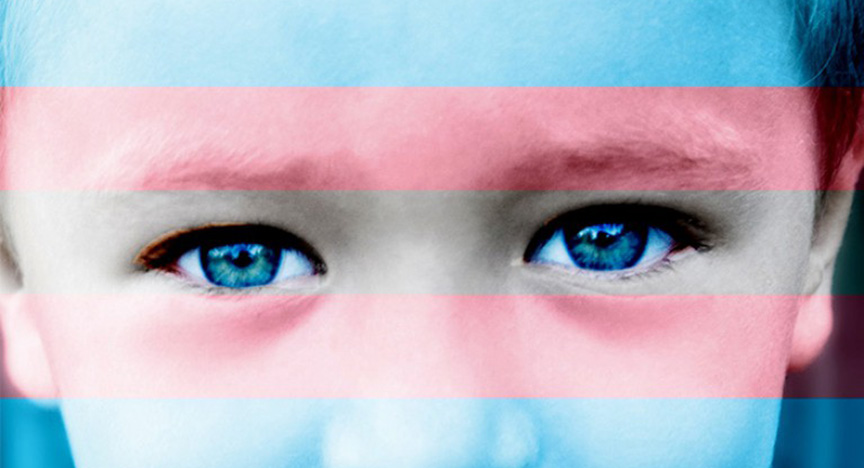
Misunderstanding and stigma about being gender diverse or transgender remains one of the biggest challenges facing children and their families. It can prevent them from receiving the help, understanding and support they need as they grapple with complex issues of gender identity. And it can mean they don’t always feel confident and safe in their own body as they find their place in the world.
Gender incongruence, having a gender that differs from that presumed at birth based on sex, is a variation in humanity that has always existed in every continent of the world. Australia is the home of the oldest living civilization on Earth and some Aboriginal languages that continue today feature multiple words to describe genders reflecting the reality of multiple genders having existed for millenia, for example, ‘yimpininni’ in Tiwi, ‘kwarte kwarte’ in Arrente, ‘kungka kungka’ in Pitjantjatjara.
Having worked as a specialist supporting children and young people who do not conform to society’s expectations for boys and girls for many years, I have seen first-hand the mental and physical harm, that stigma and misinformation about gender incongruence can cause. This can come from the young people’s personal views about gender, as well as those of their family, friends, school, place of worship and wider community.
Fortunately, I have seen a positive change in attitudes which has resulted in improved support for children and adolescents who may have questions about their gender. There are now specialist children’s gender services established in all mainland states of Australia. However, trans youth still report difficulties accessing health services with 40% saying they have experienced healthcare providers who did not understand or respect their identity. So, we still have a way to go before a young person can openly share their concerns without fear of discrimination, judgement, or ridicule.
Many children and teenagers are gender expansive which means the way they express gender (for example, through clothing, haircuts, first name) may or may not conform to society’s expectations or they may reject the whole notion of gender and seek to break down stereotypes. Other young people are transgender, which is when someone’s gender identity (internal sense of being male, female, non-binary or another descriptor) doesn’t align with the gender registered at birth. Neither are pathological or psychiatric conditions, but both may require specialist support if the child or young person is distressed or experiencing what is called gender dysphoria.
We don’t have clear answers as to why some children or adolescents are gender diverse or trans, though believe it is likely a complex interplay of factors, which may also impact on their mental health.
Part of the role of child and adolescent gender services is to increase understanding of the reasons why children and adolescents experience gender diversity, provide support to optimise health outcomes and provide a thoughtful and thorough assessment to those seeking medical interventions.
So, what is gender dysphoria?
The children and young people I see describe and experience varying levels of distress associated with a deep internal, sense that the gender typical to their body does not fit with the gender they identify with. Young people also talk about ‘social dysphoria’, or their distress related to negative reactions of others, such as invalidating misgendering experiences, bullying and discrimination. Gender dysphoria can range from manageable to debilitating, causing problems with family, friends, school performance, as well as being associated with higher rates of depression, anxiety, self-harm and suicide attempts.
Being trans is not ‘just a trend or a phase’. For those who experience gender dysphoria, it is a serious and persistent distress, psychiatrically distinguishable from other mental health concerns that often exacerbates risk.
Let’s not forget that growing up is complicated, and young people experience a wide array of internal and social pressures that may lead to questioning gender. Furthermore, gender diversity is distinct from gender expansive expression or diversity in sexuality, described by terms like gay, lesbian, bisexual, or pansexual.
There are also children who strongly identify with another gender from a very young age or those that begin experiencing distress in early puberty as they became intensely aware of the development of secondary sexual characteristics.
For example, parents may say that from a very early age their child never behaved as a stereotypical boy or wore boy’s clothing, that they wanted to be called a girl’s name and insisted on being referred to with she/her pronouns. In older adolescents, some have never had the opportunity to express these feelings as a child.
Children and young people who socially transition (adopt names, hairstyles and clothing that align with their identified gender) can experience external sources of distress such as rejection by friends or family, bullying, transphobia, messages of shame from public figures that contribute to depressive or anxiety symptoms, self-harm or suicidal ideation. Parents and siblings are the most important people in buffering the impacts of these stressors and much of the work of gender services involves supporting parents to understand their child, providing evidence-based information and explaining the options available to optimise their child’s life-long wellbeing.
Many parents have reported that the mental anguish and distress their children experiences quickly reduces after they transition, provided that the child has support from their family, school and other social networks.
Some children say to me that they enjoy playing with toys, or wearing clothes, commonly associated with another gender. Other young people tell me that they deeply wish that they had been born a different gender, but have no desire to access medical transition options, confident in their identity and even expressing gender euphoria. Other adolescents say they do want to transition but won’t do so because of current social circumstances (for example, they may be in the final year of high school or fearful of rejection from loved ones). Whatever the presenting issues may be, the child or adolescent, and their family, should have the opportunity to receive a comprehensive assessment and work closely with their treating clinician on an appropriate management plan.
The right support at the right time
The mental health risks associated with inadequate care and support for gender-diverse children are well documented. Furthermore, the lack of understanding and acceptance of gender-expansive people in our society leads to transphobia and individuals are at an increased risk of harm because of discrimination, social exclusion, bullying, physical assault and even homicide.
Gender-diverse children and adolescents also have increased rates of mental health issues if not treated early and in accordance with internationally recognised treatment guidelines. Trans youth have substantially elevated risks of suicide attempts and self-harm compared with same aged peers in Australia. Some adolescents report that they resort to self-treatment with hormones (sometimes purchased online), which has potentially serious medical consequences.
Research tells us that with the right support these kids can grow up to be trans adults with similar health, social and educational outcomes as same-aged peers. Gender affirming specialist care is associated with decreases in psychological distress and improvement in quality of life for trans youth.
Some families are concerned about children and young people changing their minds later in life, regretting either a social transition or medical gender affirming treatments. Retransition, or changing gender identity after socially or medically transitioning, does occur in small numbers and the exact gender trajectory of any child can never be predicted. However, while the vast majority of trans adolescents do not retransition, counselling and support is important for those that do experience a shift in gender identity. In adults the figures vary but it remains low and external pressures associated with difficulties in society being trans are often cited as key factors.
Ultimately, every child is unique and deserves access to specialist, developmentally informed, comprehensive assessment and timely, appropriate treatment when indicated. With 1-2% of adolescents potentially identifying as trans or gender diverse it’s important that our schools, health services and broader community learn more about what helps these kids thrive and the challenges they face.
Most importantly, these young people deserve respect and to be listened to and understood. It is only when this happens that they can get the support that will enable them to live a full and meaningful life as is everyone’s right.
More information
Queensland Children’s Gender Service
References
Achille, C., Taggart, T., Eaton, N.R. et al. (2020) Longitudinal impact of gender-affirming endocrine intervention on the mental health and well-being of transgender youths: preliminary results. Int J Pediatr Endocrinol 2020, 8 (2020).
de Vries, A., McGuire, JK., Steensma, TD., Wagenaar, ECF., Doreleijers, TAH., Cohen-Kettenis, PT. (2014) Young Adult Psychological Outcome After Puberty Suppression and Gender Reassignment. Pediatrics October 2014; 134 (4): 696–704.
Arnoldussen, M,, Steensma, T., Popma, A., van der Miesen, A., Twisk, J., de Vries, A. (2020). Re-evaluation of the Dutch approach: are recently referred transgender youth different compared to earlier referrals?. European Child & Adolescent Psychiatry. 29.
Bauer, G.R., Scheim, A.I., Pyne, J. et al (2015). Intervenable factors associated with suicide risk in transgender persons: a respondent driven sampling study in Ontario, Canada. BMC Public Health 15, 525 (2015)
Burgwal, A. van der Miesen A,I,R. Doyle, D, M. de Vries A,L,C. Gender minority stress, resilience, and mental health in clinic-referred transgender and gender diverse adolescents: a network analysis. Child Adolesc Psychiatry Ment Health 20,27(2026)
Hatchel, T., Valido, A., De Pedro, KT., Huang, Y., Espelage, DL. (2019) Minority stress among transgender adolescents: The role of peer victimization, school belonging, and ethnicity. Journal of Child and Family Studies. 2019; 28(9):2467–76
Kingsbury, M. Hammond, N,G. Johnstone, F. Colman, I. (2022) Suicidality among sexual minority and transgender adolescents: a nationally representative population-based study of youth in Canada CMAJ 2022 June 6;194:E767-74. doi: 10.1503/cmaj.212054
Klein, A. and Golub, SA. (2016) Family rejection as a predictor of suicide attempts and substance misuse among transgender and gender nonconforming adults. LGBT Health. 2016 (June)
Olson, KR., Durwood, L., Horton, R., Gallagher, NM., Devor, D. (2022); Gender Identity 5 Years After Social Transition. Pediatrics August 2022; 150 (2)
Saxby, K., Buchmueller, T., Carpenter, C. S., Coman, C., & Nolan, B. J. (2026). Mental health treatment among transgender and gender diverse people following gender affirming hormone therapy: evidence from whole-of-population Australian administrative data. EClinicalMedicine, 92, Article 103765. https://doi.org/10.1016/j.eclinm.2026.103765
Strauss, P., Cook, A., Winter, S., Watson, V., Toussaint, D., Lin, A. (2017). Trans Pathways: the mental health experiences and care pathways of trans young people. Summary of results. Telethon Kids Institute, Perth, Australia.
Telfer, M, M. Tollit, M,A. Pace, C,C. & Pang, K,C. Australian Standards of Care and Treatment Guidelines for Trans and Gender Diverse Children and Adolescents Version 1.3 Melbourne: The Royal Children’s Hospital; 2020
The Royal Australian & New Zealand College of Psychiatrists (2023) The role of psychiatrists in working with Trans and Gender Diverse people [Position Statement #103]https://www.ranzcp.org/clinical-guidelines-publications/clinical-guidelines-publications-library/role-of-psychiatrists-working-with-trans-gender-diverse-people
Tordoff, D,M. Wanta J,W. Collin, A. Stepney, C. Inwards-Breland D,J. Ahrens, K. et al (2022) Mental Health Ouctomes in Transgender and Nonbinary Youths Receiving Gender-Affirming Care JAMA Netw Open. 2022;5(2):e220978
Turban, JL., King, D., Carswell, JM., Keuroghlian, AS. (2020) Pubertal Suppression for Transgender Youth and Risk of Suicidal Ideation. Pediatrics. 2020 Feb;145(2)
Turban JL., Loo SS., Almazan, AN., Keuroghlian, AS. (2021) Factors Leading to “Detransition” Among Transgender and Gender Diverse People in the United States: A Mixed-Methods Analysis. LGBT Health. 2021 May-Jun;8(4):273-280.
Van der Miesen, A,I,R. Steensma, T,D. de Vries, A,L,C. Bos, H. Popma, A. (2020) Psychological Functioning in Transgender Adolescents Before and After Gender-Affirming Care Compared with Cisgender General Population Peers J of Adolescent Health, 2020;66(6): 699-704